

YUNOVA Stories · Study
A. P. J. Abdul Kalam: from Rameswaram to rockets and Rashtrapati Bhavan
A. P. J. Abdul Kalam · Aerospace scientist and 11th President of India
Written by YUNOVA from public sources. A. P. J. Abdul Kalam is not affiliated with and does not endorse YUNOVA.यह कहानी YUNOVA ने public sources से लिखी है। इसमें बताए गए व्यक्ति YUNOVA से जुड़े नहीं हैं और YUNOVA का समर्थन नहीं करते।
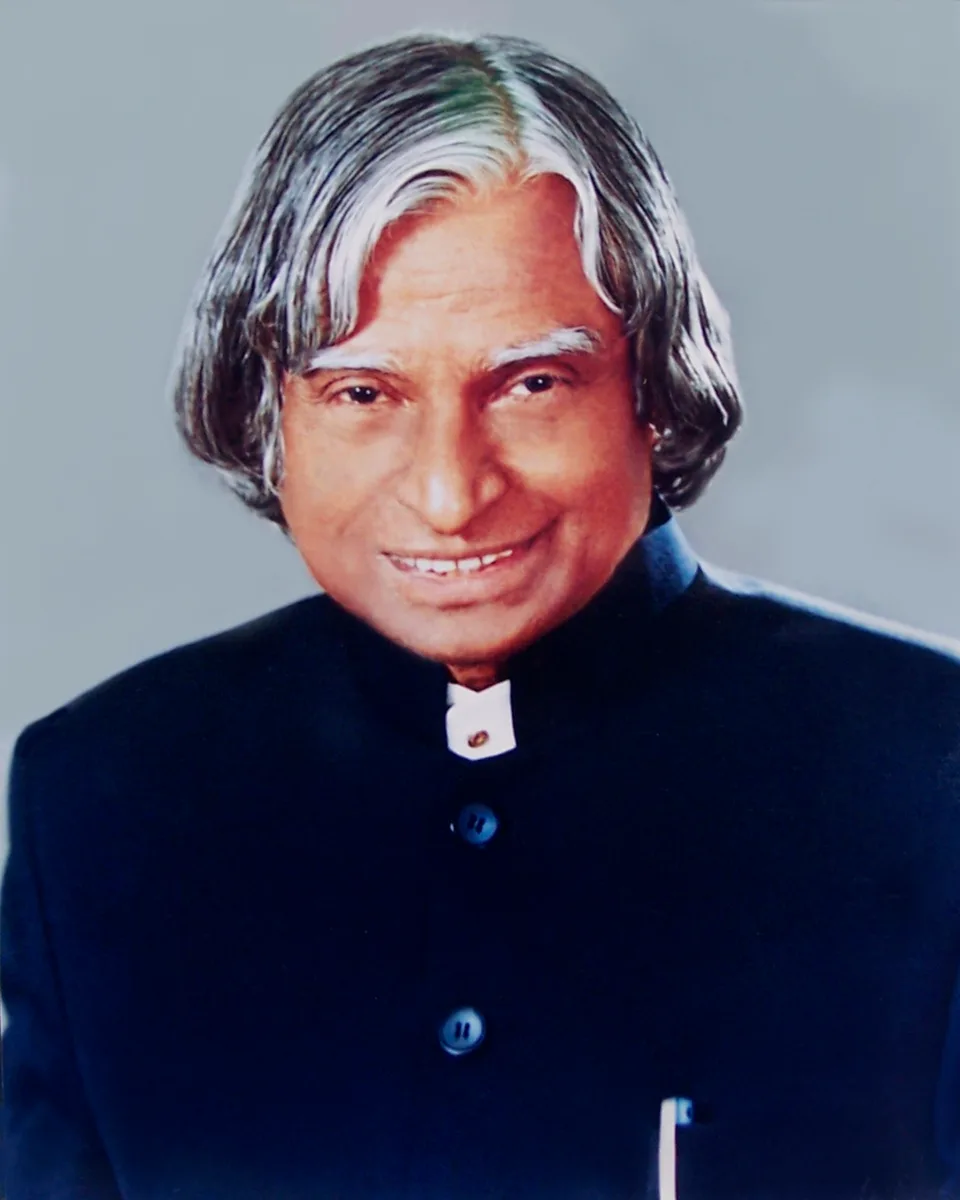
A. P. J. Abdul Kalam was born in 1931 in the temple town of Rameswaram in Tamil Nadu. He studied physics, then aeronautical engineering, and spent four decades building rockets and missiles for India before becoming its President in 2002. His life is the clearest proof that a science student from a small town can change a nation.
A humble beginning in Rameswaram
Avul Pakir Jainulabdeen Abdul Kalam was born on 15 October 1931 in Rameswaram, then part of the Madras Presidency. The Government of India's own profile of him, published when he became President, describes his start in life as a humble one.
He graduated in science from St. Joseph's College in Tiruchirappalli in 1954. He then went to the Madras Institute of Technology to study aeronautical engineering, finishing in 1957. The government profile calls that institute the crown jewel of technical education in southern India in the fifties.
After passing out as an aeronautical engineer, he joined the Directorate of Technical Development and Production of the Ministry of Defence. Soon after, he moved to the Indian Committee for Space Research as a rocket engineer, in the team led by Vikram Sarabhai that set up the rocket launching station at Thumba in Kerala.
India's first launch vehicle
Kalam was chosen to lead the team that designed and built SLV-3, India's first satellite launch vehicle. On 18 July 1980 it was launched successfully and placed the Rohini satellite in low earth orbit. For the first time, an Indian rocket had put an Indian satellite in space.
He later became director of launch vehicles and systems at ISRO, and the Office of the Principal Scientific Adviser credits him with shaping the configuration of the PSLV, the rocket that carries many of India's satellites today.
The Missile Man
In 1982 Kalam was appointed director of the Defence Research and Development Laboratory in Hyderabad. There he led the Integrated Guided Missile Development Programme, which produced the Prithvi and Agni missiles. A defence journalist who covered him for the Observer Research Foundation recalled that he worked out of a room in the laboratory and had a reputation for working around the clock.
In 1992 he became scientific adviser to the Defence Minister and head of the Defence Research and Development Organisation, a post he held until 1999. He received the Padma Bhushan in 1981, the Padma Vibhushan in 1990 and the Bharat Ratna, India's highest civilian honour, in 1997.
From November 1999 to November 2001 he was the first Principal Scientific Adviser to the Government of India, in the rank of a cabinet minister. In December 2001 he left to teach at Anna University as a professor of technology and societal transformation.
The People's President
On 25 July 2002 Kalam took office as the 11th President of India and served a five-year term. He used the office to connect with ordinary people, and especially with children and students, in a way few leaders had. Many came to call him the People's President.
He wrote poetry in Tamil, played the veena and loved Carnatic music. His books, including Wings of Fire, India 2020 and Ignited Minds, were read by millions of young Indians. By the time of his presidency, twenty-eight universities had given him honorary doctorates; the count later rose to forty-eight.
On 27 July 2015 he collapsed while giving a lecture to students at IIM Shillong and died of a cardiac arrest, aged 83. A defence writer who had known him for decades called him an inspirational figure for an entire generation of Indian youth.
The skills and habits that made the difference
Everything Kalam built rested on physics and mathematics. A rocket is Newton's laws, thermodynamics and chemistry turned into metal, and he learned those subjects first as a science graduate and then as an engineer.
He also knew how to lead a team over long years. SLV-3 took most of the 1970s to build before its 1980 success, and the missile programme he ran from 1982 produced Prithvi and Agni only after years of work. His habit, remembered by those who covered him, was to stay at the laboratory and keep the team moving.
Finally, he never stopped teaching. Whether as a professor at Anna University, as President or on the day he died, he was in front of students, explaining science and asking them to dream big for the country.
What you can learn from A. P. J. Abdul Kalamइस कहानी से आप क्या सीख सकते हैं
- Learn physics as a tool, not a chapterKalam's rockets were Class 12 physics applied with great care. When you study motion, energy or electricity, ask where it is used in the real world.
- Big results take years, not daysSLV-3 was the work of a whole decade before its 1980 launch. A board exam is the work of two years. Plan your preparation over months and let the small daily steps add up.
- Work steadily, not in burstsPeople who worked with Kalam remember him at his desk around the clock. Daily, regular study beats last-minute cramming, in science and in life.
- Share what you knowHe spent his last day teaching. Explaining a concept to a classmate helps you both, and it is a habit you can begin this week.
How you can build this skill on YUNOVAYUNOVA पर आप यह skill कैसे सीख सकते हैं
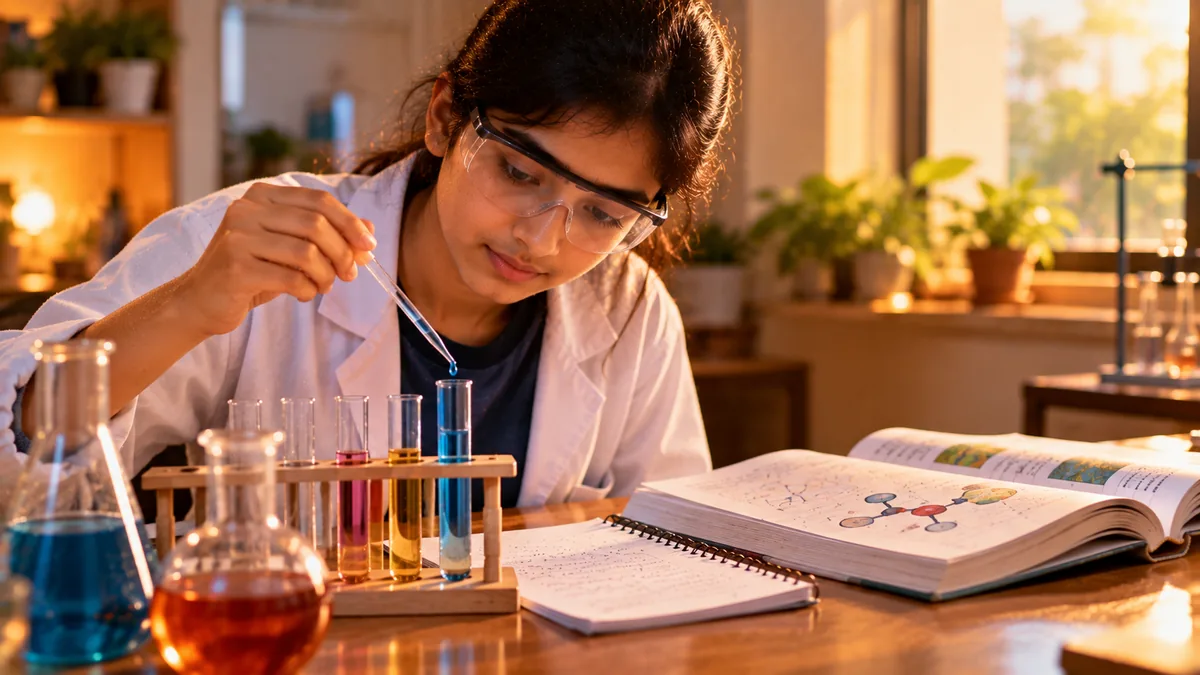
Nobody becomes A. P. J. Abdul Kalam from one course. But the physics, chemistry and mathematics of Class 12 are the same subjects he started with at St. Joseph's College, and you can study them for free on YUNOVA's Class 12 Science path. If you want to see physics in everyday life first, the Physics Everyday skill is a gentle place to begin.

हिंदी में सारांश
ए. पी. जे. अब्दुल कलाम का जन्म 1931 में तमिलनाडु के रामेश्वरम में एक साधारण परिवार में हुआ था। उन्होंने St. Joseph's College से science और Madras Institute of Technology से aeronautical engineering पढ़ी। उन्होंने भारत के पहले satellite launch vehicle SLV-3 और Prithvi और Agni missiles की टीम का नेतृत्व किया, 1997 में Bharat Ratna पाया और 2002 में भारत के राष्ट्रपति बने। आप भी Class 12 Science की physics, chemistry और maths से अपनी नींव मज़बूत कर सकते हैं।
Sourcesस्रोत
- Avul Pakir Jainulabdeen Abdul Kalam (profile on assuming the office of President), Press Information Bureau, Prime Minister's Office (accessed 17 October 2026)
- About Office of PSA: Former Principal Scientific Advisers, Dr. A. P. J. Abdul Kalam, Office of the Principal Scientific Adviser to the Government of India (accessed 17 October 2026)
- Kalam raised the status of the presidency, Observer Research Foundation (accessed 17 October 2026)
- A. P. J. Abdul Kalam, Wikipedia (accessed 17 October 2026)
Written by YUNOVA from public sources. A. P. J. Abdul Kalam is not affiliated with and does not endorse YUNOVA.
More storiesऔर कहानियाँ
- Amartya Sen: from Santiniketan to the Nobel, economics for human welfareEconomist and philosopher, 1998 Nobel laureate in economic sciences
- Andrew Ng: the professor who put machine learning online for everyoneCo-founder of Coursera and founding lead of Google Brain
- Andy Jassy: the marketing manager who built Amazon Web ServicesFounding leader of Amazon Web Services and Amazon's CEO