

YUNOVA Stories · Personal Development
B. R. Ambedkar: the scholar who chaired the drafting of India's Constitution
B. R. Ambedkar · Jurist, economist, social reformer and chairman of the Drafting Committee of the Constitution of India
Written by YUNOVA from public sources. B. R. Ambedkar is not affiliated with and does not endorse YUNOVA.यह कहानी YUNOVA ने public sources से लिखी है। इसमें बताए गए व्यक्ति YUNOVA से जुड़े नहीं हैं और YUNOVA का समर्थन नहीं करते।
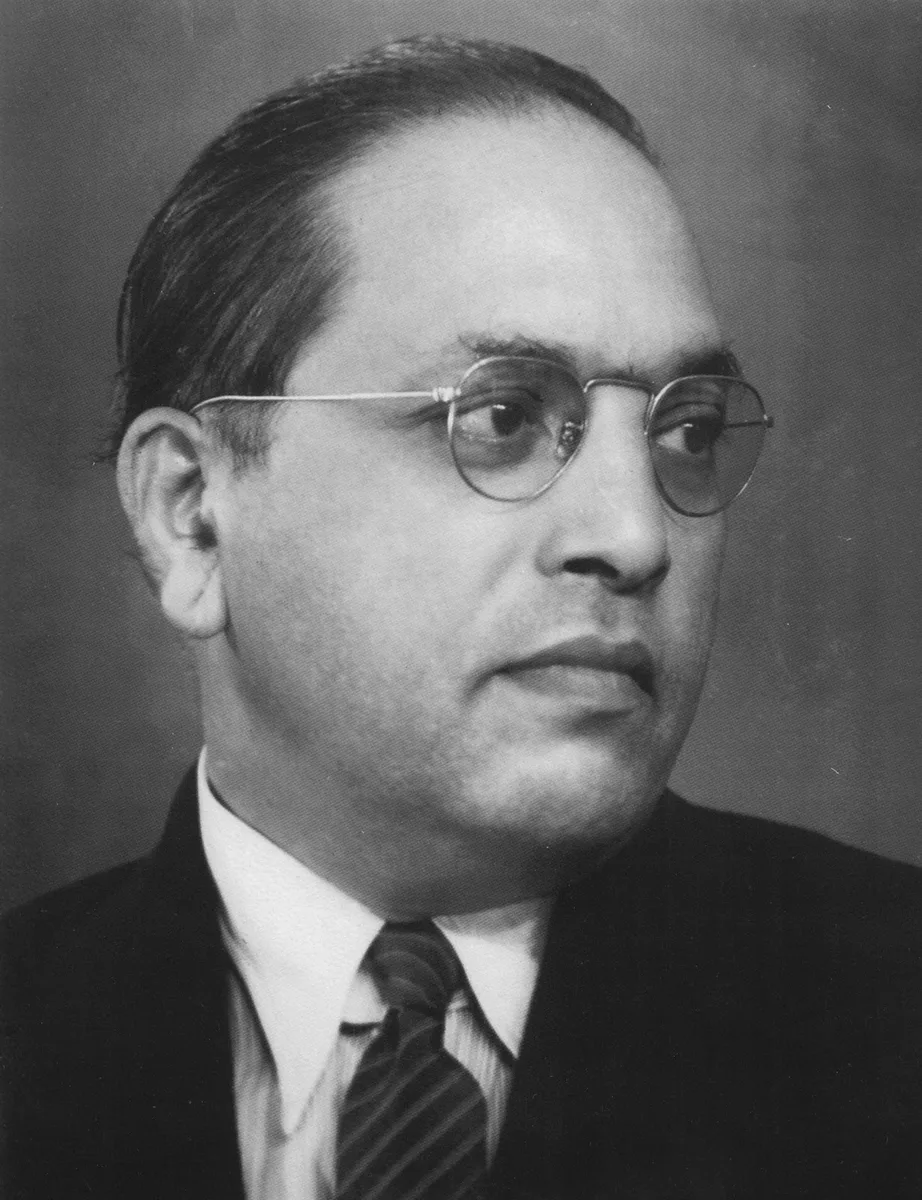
Bhimrao Ramji Ambedkar was born into a community that the society of his time treated as untouchable. He was kept apart in school, yet he went on to earn degrees from Columbia University and the London School of Economics, qualify as a barrister, and chair the committee that drafted the Constitution of India. His story shows how far careful, patient study can carry a person, and why the text he helped write is worth reading closely.
A school where he could not drink from the common tap
Ambedkar was born on 14 April 1891 in the military cantonment of Mhow, in present-day Madhya Pradesh. His family belonged to the Mahar caste. His father served in the British Indian Army and, according to the London School of Economics, insisted that his sons be educated.
School was not easy. The Supreme Court of India's biography of Ambedkar notes that his education was achieved in the face of significant discrimination. In his autobiographical notes he recalled that he was not allowed to drink water from the common tap at school. ClearIAS adds that children like him were not allowed to sit inside the classroom.
He kept studying. He passed his matriculation in 1907, joined Elphinstone College in Bombay, and in 1912 graduated from Bombay University with a degree in economics and political science. LSE records that he was the first in his community to graduate from high school.
“An idea needs propagation as much as a plant needs watering.”
— B. R. Ambedkar, via Columbia University
New York and London
In 1913 Sayajirao Gaekwad III, the Maharaja of Baroda, awarded him a scholarship to study at Columbia University in New York. There he wrote a master's thesis on the administration and finance of the East India Company and received his MA in 1915. Columbia notes that he studied under the philosopher John Dewey and that he later said Columbia was where he first experienced social equality.
From New York he went to London, registered at the London School of Economics to study economics and enrolled at Gray's Inn to study law. Money ran out, and in 1917 he had to return to India. He taught political economy at Sydenham College in Bombay, saved what he could, and with help from Chhatrapati Shahu Maharaj of Kolhapur and a loan from a friend he went back to London in 1920.
This time he finished. He was called to the bar in 1922, and LSE awarded him a master's degree in 1921 and a doctorate in 1923. His thesis was published as The Problem of the Rupee. Columbia awarded him its PhD in 1927.
From reformer to Law Minister
Back in India he founded the Bahishkrit Hitkarini Sabha to spread education among excluded communities, and in 1927 he led the Mahad Satyagraha for equal access to public water. In the early 1930s he attended the Round Table Conferences in London on India's constitutional future.
He was elected to the Constituent Assembly in 1946. On 15 August 1947 he took oath as independent India's first Law Minister, and on 29 August 1947 he was made chairman of the Drafting Committee. LSE points to his influence on the Constitution's emphasis on liberal democracy, its federal structure, its safeguards for minorities and its abolition of untouchability.
He served as Law Minister until 1951 and later became a member of the Rajya Sabha. In 1952 Columbia gave him an honorary doctorate. His health declined in 1955, and he died in his sleep in Delhi on 6 December 1956. In 1990 he was awarded the Bharat Ratna.
The skills and habits that made the difference
The first was persistence with study itself. When his money ran out in London he did not give up the degree; he went home, taught, saved and returned three years later to complete it.
The second was depth across subjects. He trained in economics, political science, history and law, and that range is visible in the Constitution's mix of rights, federal design and financial provisions.
The third was writing. From his Columbia thesis to The Problem of the Rupee, he put his arguments on paper in full, with evidence, so that others could test them.
What you can learn from B. R. Ambedkarइस कहानी से आप क्या सीख सकते हैं
- Read the articles, not only summariesThe Constitution Ambedkar helped draft is a text you can open and read. For the polity paper, read the Preamble, the Fundamental Rights and the Directive Principles in their own words before turning to notes.
- A pause is not the endHe left London in 1917 without his degree and finished it after returning in 1920. If your preparation stops for a while, go back to where you left off rather than starting over.
- Connect subjectsEconomics, history and law met in his work. In UPSC preparation, link polity topics to the history of the freedom movement and to economic questions; the syllabus rewards that kind of joined-up understanding.
- Know who wrote what, and whenDates such as 1946 for the Constituent Assembly and 29 August 1947 for the Drafting Committee are common exam facts. Build a simple timeline as you study.
How you can build this skill on YUNOVAYUNOVA पर आप यह skill कैसे सीख सकते हैं
Nobody becomes B. R. Ambedkar from one course. But the Constitution he helped draft is open to every learner, and you can begin reading and understanding it with the Indian Constitution skill on YUNOVA, for free, in Hindi. If you are preparing for the civil services, the UPSC Prelims path covers polity together with history, geography and economics.
हिंदी में सारांश
डॉ. भीमराव आंबेडकर का जन्म 1891 में महू में हुआ और बचपन में उन्हें स्कूल में भेदभाव का सामना करना पड़ा। फिर भी उन्होंने Columbia University और London School of Economics से डिग्रियाँ हासिल कीं और बैरिस्टर बने। 1947 में वे स्वतंत्र भारत के पहले कानून मंत्री बने और संविधान की Drafting Committee के अध्यक्ष रहे। आप भी YUNOVA पर Indian Constitution skill हिंदी में मुफ़्त शुरू कर सकते हैं।
Sourcesस्रोत
- Dr. Bhimrao Ramji Ambedkar, Supreme Court of India (accessed 18 October 2026)
- Dr Bhimrao Ramji Ambedkar, London School of Economics and Political Science (accessed 18 October 2026)
- Bhimrao Ambedkar: Columbians Ahead of Their Time, Columbia University (accessed 18 October 2026)
- Dr. B.R Ambedkar: The conscience keeper of modern India, ClearIAS (accessed 18 October 2026)
- B. R. Ambedkar, Wikipedia (accessed 18 October 2026)
Written by YUNOVA from public sources. B. R. Ambedkar is not affiliated with and does not endorse YUNOVA.
More storiesऔर कहानियाँ
- Amartya Sen: from Santiniketan to the Nobel, economics for human welfareEconomist and philosopher, 1998 Nobel laureate in economic sciences
- Andrew Ng: the professor who put machine learning online for everyoneCo-founder of Coursera and founding lead of Google Brain
- Andy Jassy: the marketing manager who built Amazon Web ServicesFounding leader of Amazon Web Services and Amazon's CEO