

YUNOVA Stories · Business & Productivity
Dan Bricklin: the MBA student who invented the spreadsheet
Dan Bricklin · Co-creator of VisiCalc, the first electronic spreadsheet
Written by YUNOVA from public sources. Dan Bricklin is not affiliated with and does not endorse YUNOVA.यह कहानी YUNOVA ने public sources से लिखी है। इसमें बताए गए व्यक्ति YUNOVA से जुड़े नहीं हैं और YUNOVA का समर्थन नहीं करते।
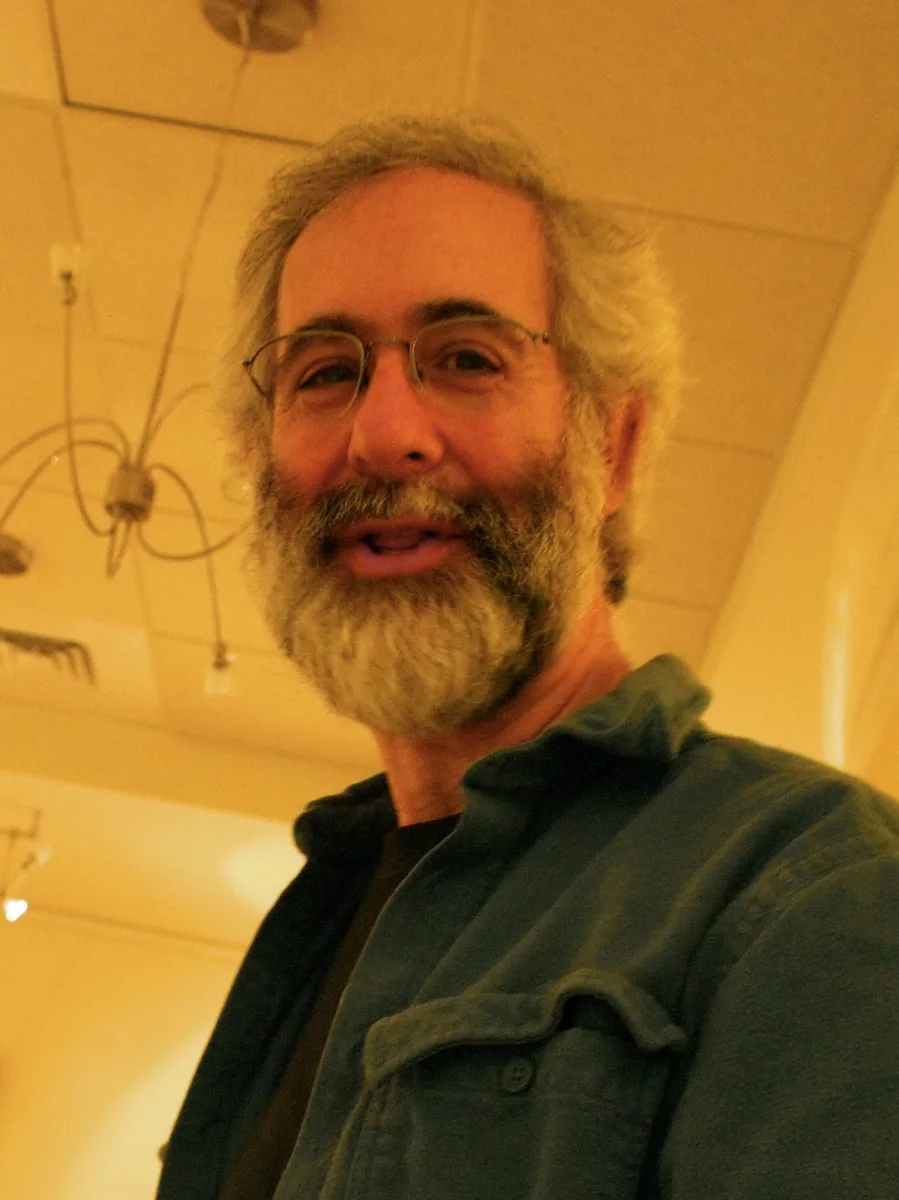
Every time you change one cell in Excel and watch the totals update, you are using an idea Dan Bricklin had as a business school student in 1978. With his friend Bob Frankston he turned a daydream about a calculator into VisiCalc, the first electronic spreadsheet, and gave people a reason to buy a personal computer. His story shows how a tool for boring rework can change the world.
An engineer goes to business school
Dan Bricklin was born in Philadelphia in 1951. He studied electrical engineering and computer science at the Massachusetts Institute of Technology and then worked as a software engineer at Digital Equipment Corporation, where he led the WPS-8 word processing project, and as a systems programmer at a cash register company called FasFax.
In 1977 he went to Harvard Business School for an MBA. Business school meant financial models, and in the 1970s a financial model was a grid of numbers worked out by hand. Change one assumption and you had to recalculate and rewrite everything that depended on it.
“Sometimes the idea behind a program is one small creative effort. Just like in a short story, one little twist in the plot is the whole idea behind it.”
— Dan Bricklin, via Computer History Museum
The daydream in Aldrich 108
Bricklin has written his own account of the idea. Sitting in Aldrich Hall, room 108, in the spring of 1978, he daydreamed about a calculator with a ball in its back like a mouse, and a display that hung in the air like a fighter pilot's, so that he could move numbers around, circle them to get a sum, and answer a case question in seconds.
That summer, riding a bicycle on the island of Martha's Vineyard, he decided to turn the idea into a product after graduating. The heads-up display gave way to an ordinary screen. He prototyped the layout in BASIC on the business school's timesharing system, and that is when rows and columns, with their letter and number names, and the status line showing the formula behind a cell, took shape.
In October 1978 he built the first personal computer prototype over a weekend, on an Apple II borrowed from Dan Fylstra, who would become the program's publisher. His first idea for moving the cursor was the computer's game paddle; it was too sluggish, so he switched to the two arrow keys and the space bar.
VisiCalc
Bricklin brought in his friend Bob Frankston, a fellow programmer from MIT, to write the production version. They agreed a publishing deal with Fylstra's company, Personal Software, over dinner at a Chinese restaurant in Cambridge, and incorporated their own company, Software Arts, on 2 January 1979. Much of VisiCalc was written that year in an attic.
VisiCalc was announced in June 1979 at the National Computer Conference and sold for the Apple II. The Computer History Museum says it is widely credited with fuelling the rapid growth of the personal computer industry, because for many business users it was the program that convinced them to buy a computer at all. In 1996 Steve Jobs spoke about how important it had been to the Apple II's success.
Bricklin served as chairman of Software Arts until 1985, when the company and VisiCalc were sold to Lotus. Lotus 1-2-3, and later Microsoft Excel, built on the idea. The spreadsheet itself was never patented; Bricklin has written an essay explaining why.
After the spreadsheet
He kept building. He founded Software Garden, where he developed programs including Dan Bricklin's Demo Program, co-founded Slate Corporation in 1990 to make software for pen computers, and founded Trellix in 1995 to make website publishing tools. Interland bought Trellix in 2003 and he served as its chief technology officer.
He was elected a Fellow of the Association for Computing Machinery in 1994, is a member of the US National Academy of Engineering, and in 2004 became a Fellow of the Computer History Museum. His book Bricklin on Technology includes a full chapter, with photographs and documents, on how VisiCalc was made.
The skills and habits that made the difference
The first was noticing boredom. The spreadsheet came from a student who hated recalculating a table by hand and asked whether a machine could do the rework. Most Excel formulas start the same way.
The second was prototyping. Bricklin tried the design in BASIC, then on a borrowed Apple II, then with a game paddle, then with arrow keys. He kept a work journal and drew state diagrams on spreadsheet paper. Each rough version taught him something the next one fixed.
The third was knowing both sides. He was an engineer who had gone to business school, so he understood what the user needed and how to build it. That pairing is still what makes someone good with spreadsheets: knowing the business question and the tool.
What you can learn from Dan Bricklinइस कहानी से आप क्या सीख सकते हैं
- Let rework annoy youVisiCalc exists because recalculating by hand was tedious. When you repeat the same step in Excel more than twice, look for the formula or feature that does it for you.
- Build a rough version firstBricklin prototyped in BASIC over a weekend before writing the real thing. Set up a quick sheet with sample data, see what breaks, and then make it neat.
- Learn the grid's logic, not just its buttonsRows, columns, cell names and the formula bar were designed on purpose in 1978. Understanding why they exist makes every new function easier to learn.
- Pair the tool with a real questionHe was solving business cases. Practise Excel on something that matters to you, like a budget or a shop's stock, and the skills will stick.
How you can build this skill on YUNOVAYUNOVA पर आप यह skill कैसे सीख सकते हैं
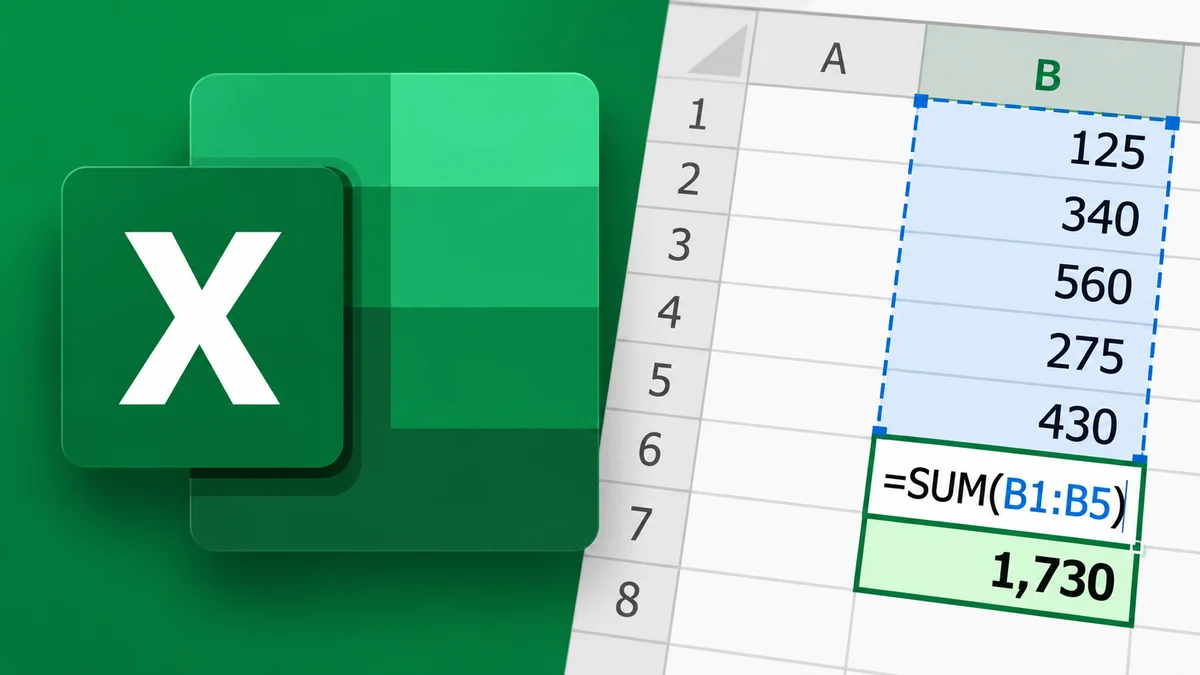
Nobody becomes Dan Bricklin from one course. But the grid he designed is the same one you open in Excel and Google Sheets today, and learning to use it well is a skill anyone can build. On YUNOVA you can learn Excel and Google Sheets step by step, for free, in Hindi.
हिंदी में सारांश
डैन ब्रिकलिन का जन्म 1951 में अमेरिका के फ़िलाडेल्फ़िया में हुआ और उन्होंने MIT से engineering पढ़ी। 1978 में Harvard Business School में पढ़ते समय उन्हें हाथ से हिसाब दोबारा लिखने से ऊब हुई, और उन्होंने electronic spreadsheet का विचार सोचा। अपने दोस्त Bob Frankston के साथ उन्होंने 1979 में VisiCalc बनाया, जो आज के Excel का पूर्वज है। आप भी YUNOVA पर Excel और Google Sheets की skill हिंदी में मुफ़्त सीख सकते हैं।
Sourcesस्रोत
- Dan Bricklin: 2004 Fellow, Computer History Museum (accessed 17 October 2026)
- Software Arts and VisiCalc: The Idea, Dan Bricklin (bricklin.com) (accessed 17 October 2026)
- VisiCalc: Information from its creators, Dan Bricklin and Bob Frankston, Dan Bricklin (bricklin.com) (accessed 17 October 2026)
- Dan Bricklin, Wikipedia (accessed 17 October 2026)
Written by YUNOVA from public sources. Dan Bricklin is not affiliated with and does not endorse YUNOVA.
More storiesऔर कहानियाँ
- Amartya Sen: from Santiniketan to the Nobel, economics for human welfareEconomist and philosopher, 1998 Nobel laureate in economic sciences
- Andrew Ng: the professor who put machine learning online for everyoneCo-founder of Coursera and founding lead of Google Brain
- Andy Jassy: the marketing manager who built Amazon Web ServicesFounding leader of Amazon Web Services and Amazon's CEO