

YUNOVA Stories · Design & Creative
Don Norman: the scientist who said bad design is not your fault
Don Norman · Cognitive scientist and author of The Design of Everyday Things
Written by YUNOVA from public sources. Don Norman is not affiliated with and does not endorse YUNOVA.यह कहानी YUNOVA ने public sources से लिखी है। इसमें बताए गए व्यक्ति YUNOVA से जुड़े नहीं हैं और YUNOVA का समर्थन नहीं करते।
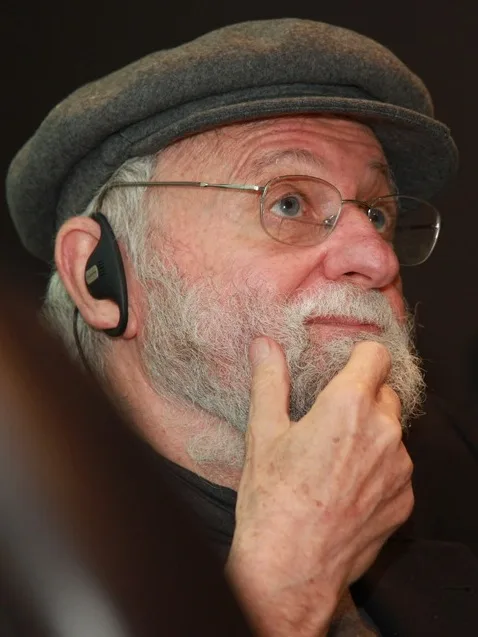
Have you ever pushed a door that needed a pull, or pressed the wrong button on a remote, and felt foolish? Don Norman spent his career arguing that the fault was not yours. An electrical engineer who became a cognitive scientist, he wrote The Design of Everyday Things, helped found the field of user-centred design and, at Apple, held the first job title to use the words User Experience. His story shows that good design starts with understanding how people think.
From circuits to the human mind
Donald Norman graduated in electrical engineering from the Massachusetts Institute of Technology in 1957. He then went to the University of Pennsylvania hoping to study computers, but the university did not yet offer computer courses. He finished a master's degree in electrical engineering in 1959 and then changed direction completely, earning a PhD in psychology in 1962.
After four years at Harvard University's Center for Cognitive Studies, he joined the psychology department at the University of California, San Diego. There he founded the Cognitive Science Department. For years his work was about memory, attention and how people process information.
“I decided that if I couldn't study computers, I would study the human brain--the other computational device.”
— Don Norman, via The Franklin Institute
Doors, switches and a famous book
The turn towards design came from real accidents. The Franklin Institute records that while consulting on the Three Mile Island nuclear accident, Norman realised that his mix of engineering and psychology could be used to study design. His research moved to aviation safety and computers.
Then, on a sabbatical in England, he found himself frustrated by simple things like working doors and light switches. Instead of blaming himself, he started studying everyday objects. The result was The Psychology of Everyday Things, published in 1988 and later renamed The Design of Everyday Things.
The book argues that when people struggle with objects and interfaces, the design is usually at fault, not the person. It gave designers words that are still used every day: affordances, mappings, feedback and conceptual models. One chapter title of the 2013 revised edition sums up the idea: Human Error? No, Bad Design. That edition added the idea of signifiers and replaced the old examples with new ones.
The first User Experience title
In 1993 Norman retired from UC San Diego for the first time and joined Apple as an Apple Fellow. He became the User Experience Architect of a small three-person team called the User Experience Office. Nielsen Norman Group notes that this was the first use of the term User Experience in a job title, long before anyone said UX. He later served as a vice president at Apple.
He went on to work at Hewlett-Packard, co-founded the consulting firm Nielsen Norman Group with Jakob Nielsen, and taught at Northwestern University, where he co-directed a programme combining an MBA with engineering and design. In 2014 he returned to UC San Diego as founding director of its Design Lab and retired from that role at the end of 2020.
In 2006 the Franklin Institute gave him the Benjamin Franklin Medal for developing the field of user-centred design. He is a member of the US National Academy of Engineering and a co-founder of the CHI community, which gave him its lifetime achievement award. His later books include Emotional Design and Design for a Better World.
The skills and habits that made the difference
The first was crossing fields. Norman was an engineer who studied the mind. That pairing let him see a confusing control panel both as a machine and as a puzzle for a human brain. UI/UX design still sits exactly there, between technology and psychology.
The second was noticing small frustrations. A door you cannot open or a switch you cannot match to its light is easy to ignore. He treated each one as evidence of a design problem worth explaining.
The third was refusing to blame the user. His work reframed human error as a sign that the design did not fit people. That habit of asking what the product did wrong, before asking what the person did wrong, is the heart of user-centred design.
The fourth was teaching in plain words. His books are written for ordinary readers, not only for specialists, which is one reason his ideas spread so widely.
What you can learn from Don Normanइस कहानी से आप क्या सीख सकते हैं
- Watch people, not just screensNorman learned from doors and switches that confused him. Before you design an app screen, watch someone use the current one and note where they hesitate or tap the wrong thing.
- When users fail, check the design firstIf many people miss a button, the problem is usually the button. Treat every mistake in testing as a clue about your design rather than a sign that users are careless.
- Learn the basic vocabularyAffordances, signifiers, mapping and feedback are simple ideas with big effects. Once you know them, you will spot them in every good and bad interface you use.
- Bring your own backgroundNorman moved from engineering to psychology to design. Whatever you studied before, from commerce to art, it can help you understand users in a way others cannot.
How you can build this skill on YUNOVAYUNOVA पर आप यह skill कैसे सीख सकते हैं
Nobody becomes Don Norman from one course. But the questions he asked, about how people think and why they get stuck, are the starting point of every good app and website. On YUNOVA you can learn UI/UX Design step by step, for free, in Hindi.

हिंदी में सारांश
डॉन नॉर्मन ने MIT से electrical engineering पढ़ी और फिर psychology में PhD की। उन्होंने The Design of Everyday Things लिखी, जो बताती है कि जब लोग किसी चीज़ को इस्तेमाल करने में अटकते हैं तो गलती अक्सर design की होती है, इंसान की नहीं। 1993 में Apple में उनका पद पहली बार User Experience शब्दों वाला job title बना। आप भी YUNOVA पर UI/UX Design की skill हिंदी में मुफ़्त सीखना शुरू कर सकते हैं।
Sourcesस्रोत
- Donald Norman: 2006 Benjamin Franklin Medal in Computer and Cognitive Science, The Franklin Institute (accessed 18 October 2026)
- Don Norman, co-founder and board member of Nielsen Norman Group, Nielsen Norman Group (accessed 18 October 2026)
- About Don Norman, Don Norman (jnd.org) (accessed 18 October 2026)
- The Design of Everyday Things, Revised and Expanded Edition, Don Norman (jnd.org) (accessed 18 October 2026)
- A review of The Design of Everyday Things by Don Norman, The Compulsive Reader (accessed 18 October 2026)
- Don Norman, Wikipedia (accessed 18 October 2026)
Written by YUNOVA from public sources. Don Norman is not affiliated with and does not endorse YUNOVA.
More storiesऔर कहानियाँ
- Amartya Sen: from Santiniketan to the Nobel, economics for human welfareEconomist and philosopher, 1998 Nobel laureate in economic sciences
- Andrew Ng: the professor who put machine learning online for everyoneCo-founder of Coursera and founding lead of Google Brain
- Andy Jassy: the marketing manager who built Amazon Web ServicesFounding leader of Amazon Web Services and Amazon's CEO