

YUNOVA Stories · Technology
Donald Knuth: the patient scholar who wrote the book on algorithms
Donald Knuth · Author of The Art of Computer Programming and creator of TeX
Written by YUNOVA from public sources. Donald Knuth is not affiliated with and does not endorse YUNOVA.यह कहानी YUNOVA ने public sources से लिखी है। इसमें बताए गए व्यक्ति YUNOVA से जुड़े नहीं हैं और YUNOVA का समर्थन नहीं करते।
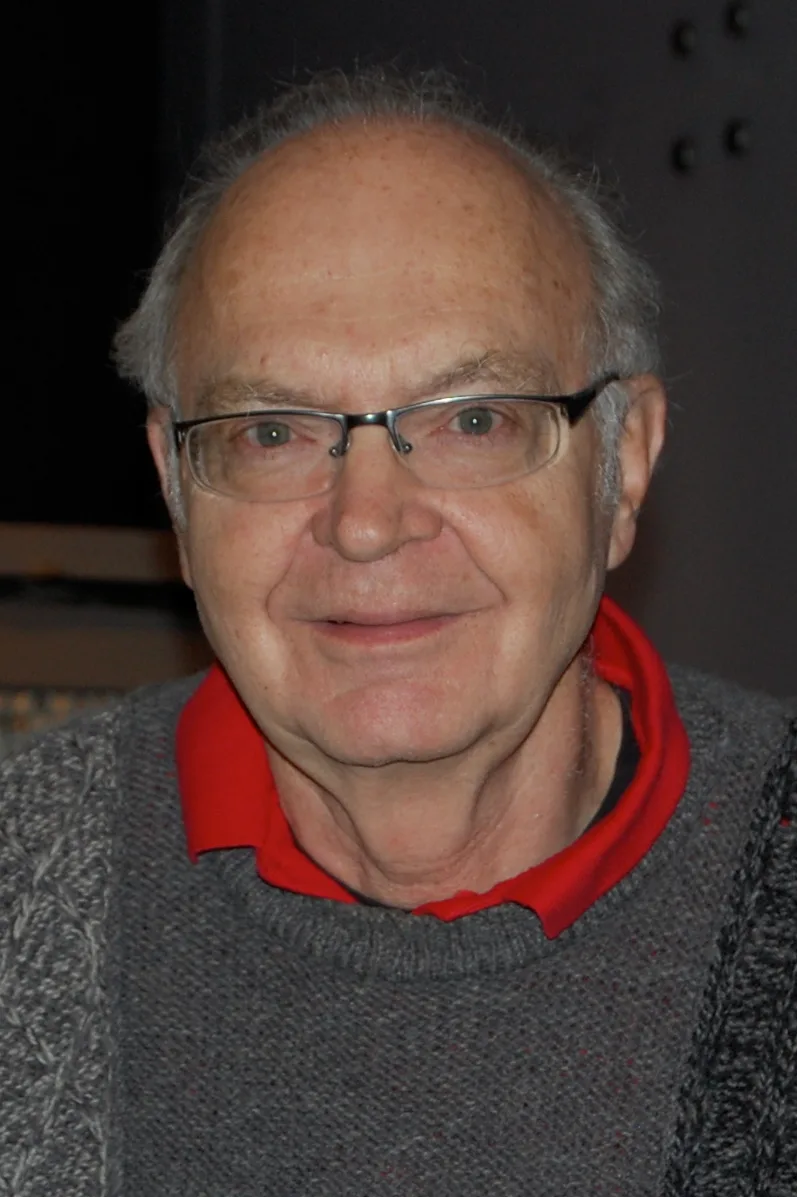
When you study how fast a sorting method runs or why one search beats another, you are standing on ground that Donald Knuth helped lay. A mathematics student who fell for an early IBM computer, he spent decades writing The Art of Computer Programming, a series that treats algorithms with the care of a scientist. Along the way he built TeX, won the Turing Award, and showed that slow, deep study is a real strategy.
A mathematics student meets the IBM 650
Donald Knuth was born in 1938 in Milwaukee, Wisconsin, in the United States. He studied mathematics at the Case Institute of Technology, which gave him both a bachelor's and a master's degree in 1960, and then earned a PhD in mathematics from Caltech in 1963.
The Computer History Museum says his lifelong interest in computers began at Case, where he discovered the IBM 650. As an undergraduate he wrote a program to help coach the college basketball team, and the work was featured on the CBS Evening News with Walter Cronkite. It was an early sign of a habit he kept all his life: taking a real problem and working out exactly how a machine could solve it.
“Email is a wonderful thing for people whose role in life is to be on top of things. But not for me; my role is to be on the bottom of things.”
— Donald Knuth, via Donald E. Knuth, Stanford University
The Art of Computer Programming
Knuth became a professor at Stanford University in 1968, the same year the first volume of The Art of Computer Programming appeared. The series set out to collect the fundamental algorithms of computing, explain them carefully, and analyse how much work each one really does. The Kyoto Prize citation says he systematised the fundamental algorithms of computer processing and calls the books both a textbook and a dictionary.
The work did not stop in the 1960s. His Stanford page records Volume 4A appearing in 2011 and Volume 4B in 2022, decades after Volume 1. At the end of 1999 the magazine American Scientist named the books among the twelve most important physical-science monographs of the century, in a list that included Einstein on relativity and Feynman on quantum electrodynamics.
Knuth also treats every reader as a proofreader. The first person to find an error in one of his books receives a reward cheque of 2.56 US dollars, which he describes as one hexadecimal dollar. Generations of students have hunted for mistakes in his pages, and that hunting is itself a way of reading closely.
TeX, literate programming and awards
In 1977, unhappy with the poor typesetting proposed for a new volume of his books, Knuth set out to build his own system. The result was TeX, along with the METAFONT font system. The Computer History Museum calls TeX a worldwide standard for technical publishing, and the Kyoto Prize citation notes it is used to publish the papers of the American Mathematical Society.
He also argued that a program should read like a document that another person can understand. He built the WEB system, which mixes code with its explanation, and called the idea literate programming.
His honours include the ACM Turing Award in 1974, the US National Medal of Science in 1979 and the Kyoto Prize in 1996. In 1998 he was named a Fellow of the Computer History Museum.
The skills and habits that made the difference
The first was depth over speed. Knuth has written that he stopped using email on 1 January 1990, after about fifteen years of it, because his work needs long hours of study and uninterrupted concentration. He tries to learn certain areas of computer science exhaustively and then turn that knowledge into a form that busy people can use.
The second was measurement. Instead of saying one algorithm feels faster, he counted the steps it takes and analysed them with mathematics. That habit is the root of what DSA learners now call time complexity.
The third was care for the reader. From clear explanations to reward cheques for errors to a typesetting system built so formulas would print properly, he kept asking how the person on the other side of the page would understand the work.
What you can learn from Donald Knuthइस कहानी से आप क्या सीख सकते हैं
- Count the steps, do not guessKnuth analysed algorithms by counting the work they do. When you solve a DSA problem, write down how many steps your loop takes as the input grows, before you call it fast or slow.
- Protect time for deep workHe gave up email to study without interruption. Keep a daily block, even forty minutes, with your phone away, and work through one data structure properly.
- Read slowly and look for mistakesHis readers hunt for errors in his books. Trace an algorithm by hand on a small example and check every line; that is how real understanding forms.
- Explain your code in plain wordsLiterate programming means writing code another person can follow. After solving a problem, explain your approach in a few sentences, as if teaching a friend.
- Think in years, not daysHis series has been growing since 1968. Algorithms take time to sink in, so return to old topics and solve them again with fresh eyes.
How you can build this skill on YUNOVAYUNOVA पर आप यह skill कैसे सीख सकते हैं
Nobody becomes Donald Knuth from one course. But the ideas at the heart of his books, from sorting and searching to measuring how much work an algorithm does, are the same ones every programmer learns. On YUNOVA you can build the Data Structures and Algorithms skill step by step, for free, in Hindi.

हिंदी में सारांश
डोनाल्ड क्नुथ का जन्म 1938 में अमेरिका के मिलवॉकी में हुआ और उन्होंने गणित की पढ़ाई की। 1968 से उन्होंने The Art of Computer Programming लिखना शुरू किया, जिसमें algorithms को ध्यान से समझाया और मापा गया है। उन्होंने TeX बनाया और 1974 में Turing Award जीता। आप भी YUNOVA पर Data Structures and Algorithms की skill हिंदी में मुफ़्त सीखना शुरू कर सकते हैं।
Sourcesस्रोत
- Donald Knuth: 1998 Fellow, Computer History Museum (accessed 18 October 2026)
- Knuth versus Email, Donald E. Knuth, Stanford University (accessed 18 October 2026)
- The Art of Computer Programming (TAOCP), Donald E. Knuth, Stanford University (accessed 18 October 2026)
- Donald Ervin Knuth: 1996 Kyoto Prize Laureate, Inamori Foundation (Kyoto Prize) (accessed 18 October 2026)
- Donald Knuth, Wikipedia (accessed 18 October 2026)
Written by YUNOVA from public sources. Donald Knuth is not affiliated with and does not endorse YUNOVA.
More storiesऔर कहानियाँ
- Amartya Sen: from Santiniketan to the Nobel, economics for human welfareEconomist and philosopher, 1998 Nobel laureate in economic sciences
- Andrew Ng: the professor who put machine learning online for everyoneCo-founder of Coursera and founding lead of Google Brain
- Andy Jassy: the marketing manager who built Amazon Web ServicesFounding leader of Amazon Web Services and Amazon's CEO