

YUNOVA Stories · Study
Fali S. Nariman: seven decades of reading, argument and principle
Fali S. Nariman · Senior Advocate of the Supreme Court of India and constitutional jurist
Written by YUNOVA from public sources. Fali S. Nariman is not affiliated with and does not endorse YUNOVA.यह कहानी YUNOVA ने public sources से लिखी है। इसमें बताए गए व्यक्ति YUNOVA से जुड़े नहीं हैं और YUNOVA का समर्थन नहीं करते।
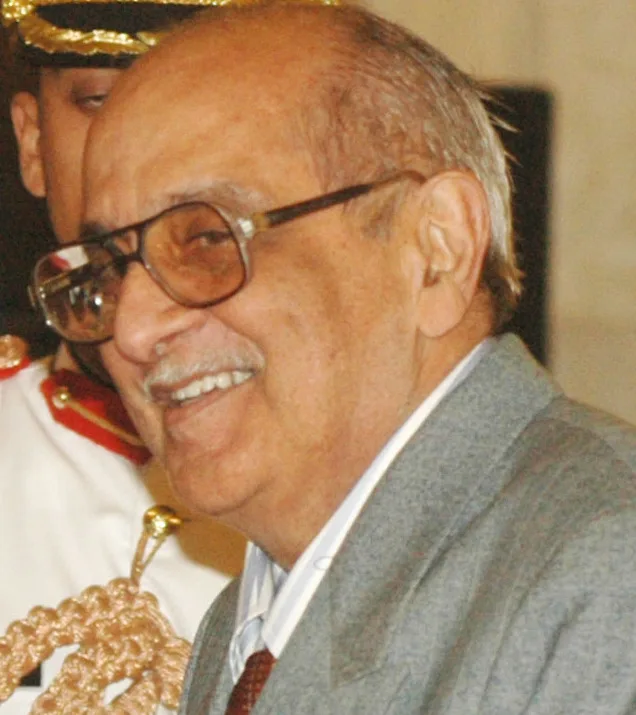
Fali Sam Nariman began practising law in Bombay in 1950, the year India's Constitution came into force, and was still writing about it in 2023. In between he argued some of the most important constitutional cases the Supreme Court has heard, resigned a high government post on principle, and read widely all his life. For anyone preparing for CLAT, his career shows what a lifetime of careful reading and clear argument can build.
From Rangoon to the Bombay bar
Nariman was born on 10 January 1929 in Rangoon, Burma, now Yangon in Myanmar, into a Parsi family. His father, Sam Nariman, had moved there in 1927 to open a branch office of the New India Assurance Company.
He studied law at Government Law College in Bombay, now Mumbai, and after graduating in 1950 began his practice at the Bombay High Court. Law Asia, the legal journal on whose editorial board he later served, notes that he was one of the first generation of lawyers to start work soon after the Constitution was adopted, and that his early practice was largely in commercial law.
In his autobiography, Before Memory Fades, he recalled advice from the senior lawyer C. K. Daphtary: that thinking about a case matters more than simply reading the brief. Law Asia records that he followed it.
“Law is a matter of the heart, as well as the head. You have to have compassion; it is one of the greatest qualities.”
— Fali S. Nariman, via Bar & Bench
Delhi, the Supreme Court and a resignation
In 1971 he was designated a Senior Advocate and moved to Delhi to practise in the Supreme Court. Around the same time he was appointed Additional Solicitor General of India, one of the government's senior law officers.
When the Emergency was declared in June 1975, he resigned from that post in protest. Law Asia describes the resignation as a one-line letter, and calls him one of the few who placed individual conscience above political convenience.
Cases that shaped constitutional law
Over the following decades Nariman appeared in many landmark cases. Bar & Bench lists among them the Golaknath case on Parliament's power over Fundamental Rights, Minerva Mills, where the Court held that the power to amend the Constitution is itself limited, and the TMA Pai case on minority educational rights under Article 30. LiveLaw adds the Kesavananda Bharati case, the source of the basic structure doctrine, which he defended for the rest of his life.
He also argued a series of cases on how judges are appointed, including the 1993 Supreme Court Advocates-on-Record Association case and the later challenge to the National Judicial Appointments Commission. In the Bhopal gas disaster litigation he represented Union Carbide, and the case ended in a settlement approved by the Supreme Court.
Alongside his practice he was President of the Bar Association of India from 1991 to 2010 and a nominated member of the Rajya Sabha from 1999 to 2005. He received the Padma Bhushan in 1991 and the Padma Vibhushan in 2007. His books include The State of the Nation, God Save the Hon'ble Supreme Court and, in 2023, You Must Know Your Constitution.
Fali S. Nariman died in Delhi on 21 February 2024, aged 95. His son, Rohinton Nariman, served as a judge of the Supreme Court.
The skills and habits that made the difference
The first was reading. LiveLaw, in a tribute by a lawyer who knew him for years, describes him as an avid reader of books, newspapers and journals across many subjects, who saw reading as a way to sharpen the mind as well as a pleasure.
The second was thinking before speaking. Daphtary's advice, to spend time thinking about a case rather than only reading the papers, is the habit he chose to remember in his own memoir.
The third was principle. Bar & Bench recalls him telling them in 2010 that law needs the heart as well as the head, and that compassion is one of the greatest qualities a lawyer can have. His resignation in 1975 showed he was willing to act on his beliefs.
What you can learn from Fali S. Narimanइस कहानी से आप क्या सीख सकते हैं
- Read widely, not only the syllabusCLAT tests reading comprehension across legal, general and current-affairs passages. Nariman read across subjects all his life. A daily habit of reading editorials and long articles builds the same muscle the exam measures.
- Think about the question before you answerHis mentor told him that thinking about a case matters more than just reading the brief. In legal reasoning questions, pause to find the principle the passage gives you before you look at the options.
- Know the Constitution in its own wordsHis career was built on provisions like Article 30 and on doctrines such as basic structure. Read the key articles yourself, and learn the landmark cases by what each one actually decided.
- Principle is part of the professionHe gave up a senior government post rather than serve during the Emergency. Law is a career of argument, but also of judgment about what is right.
How you can build this skill on YUNOVAYUNOVA पर आप यह skill कैसे सीख सकते हैं
Nobody becomes Fali S. Nariman from one course. But his career began with the same foundations every law aspirant needs: careful reading, logical reasoning and a working knowledge of the Constitution. YUNOVA's CLAT Study path covers that preparation, for free, in Hindi, and the Indian Constitution skill is the place to read the provisions he argued about for seven decades.


हिंदी में सारांश
फ़ली एस. नरीमन ने 1950 में बॉम्बे हाई कोर्ट में वकालत शुरू की और 1971 में Supreme Court में Senior Advocate बने। 1975 में Emergency के विरोध में उन्होंने Additional Solicitor General का पद छोड़ दिया। उन्होंने संविधान से जुड़े कई ऐतिहासिक मुक़दमों में बहस की और जीवन भर ख़ूब पढ़ते रहे। आप भी YUNOVA पर CLAT की तैयारी हिंदी में मुफ़्त शुरू कर सकते हैं।
Sourcesस्रोत
- Eminent Jurist Senior Advocate Fali Nariman passes away, Bar & Bench (accessed 18 October 2026)
- 'Doyen of the bar' Fali Nariman a guardian of the constitution, Law.asia (India Business Law Journal) (accessed 18 October 2026)
- Remembering Fali S Nariman: A Noble and Brilliant Jurist, LiveLaw (accessed 18 October 2026)
- Veteran jurist Fali S Nariman dies at 95, Maktoob Media (accessed 18 October 2026)
- Fali Sam Nariman, Wikipedia (accessed 18 October 2026)
Written by YUNOVA from public sources. Fali S. Nariman is not affiliated with and does not endorse YUNOVA.
More storiesऔर कहानियाँ
- Amartya Sen: from Santiniketan to the Nobel, economics for human welfareEconomist and philosopher, 1998 Nobel laureate in economic sciences
- Andrew Ng: the professor who put machine learning online for everyoneCo-founder of Coursera and founding lead of Google Brain
- Andy Jassy: the marketing manager who built Amazon Web ServicesFounding leader of Amazon Web Services and Amazon's CEO