YUNOVA Stories · Technology
Guido van Rossum: the side project that became Python
Guido van Rossum · Creator of the Python programming language
Written by YUNOVA from public sources. Guido van Rossum is not affiliated with and does not endorse YUNOVA.यह कहानी YUNOVA ने public sources से लिखी है। इसमें बताए गए व्यक्ति YUNOVA से जुड़े नहीं हैं और YUNOVA का समर्थन नहीं करते।
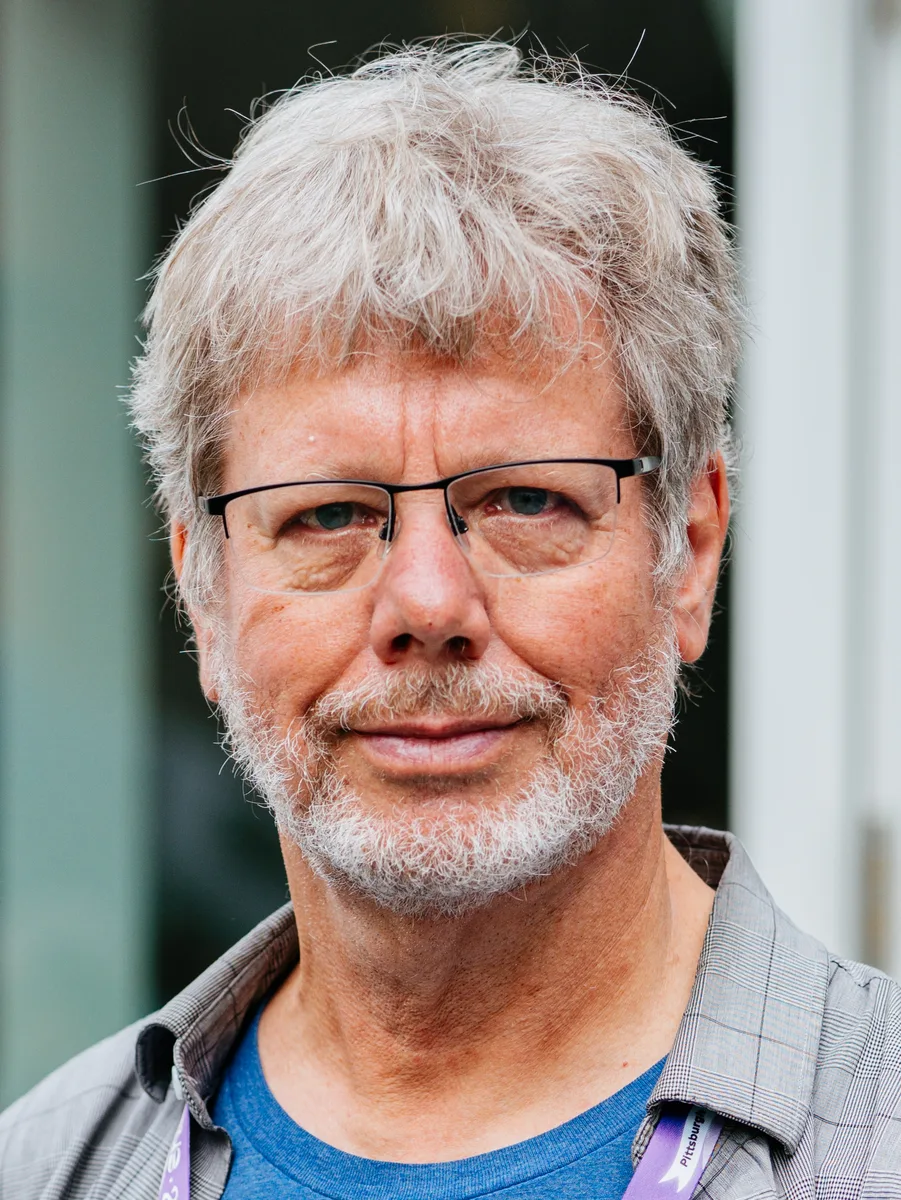
Guido van Rossum was a young programmer at a Dutch research institute when he started writing a new language on the side. Nobody had asked for it and no budget paid for it. He named it after a comedy show and released it in 1991. Today Python runs websites, banks, science labs and machine learning systems, and it is the first language many people learn. His story is about learning from a project that did not succeed.
Mathematics, Amsterdam and a computer centre
Guido van Rossum was born in the Netherlands in 1956. He studied at the University of Amsterdam and received a master's degree in mathematics and computer science in 1982.
He did not wait for the degree to start programming. His résumé records that while studying he worked part-time for five years as a systems programmer at SARA, Amsterdam's academic computer centre. By the time he graduated he had years of practical experience keeping real machines running.
“Invariably you'll find that if the language is any good your users are going to take it to places where you never thought it would be taken.”
— Guido van Rossum, via Computer History Museum
ABC: a language that did not take off
In late 1982 he joined CWI, the Dutch national research institute for mathematics and computer science, as a programmer in the ABC group. ABC was a language meant for non-expert users, people who were not professional programmers. He spent four years on its design and implementation.
ABC did not become a success, and after four or five years the project was stopped. In his own history of Python he writes plainly that it ended due to the lack of obvious success. He moved to CWI's Amoeba group, which was building a new distributed operating system.
The experience was not wasted. He later wrote that ABC gave him the key inspiration for Python, Amoeba gave him the immediate motivation, and CWI's multimedia group, which he joined in 1991, helped it grow.
A language between C and the shell
On the Amoeba project, writing system administration tools in C took too long, and the usual Unix shell did not fit the new system. What was needed, as he put it, was a language that would bridge the gap between C and the shell. He decided to design one, keeping everything he liked about ABC and fixing what he saw as its problems.
No money at CWI was ever officially set aside for it. It grew as a side project that became useful to his colleagues. For a name, he chose not to overthink it and picked Monty Python's Flying Circus, one of his favourite comedy groups.
The Computer History Museum records that he first released Python in 1991. He made it open source, so anyone could contribute, and the user community gave him the title Benevolent Dictator For Life, the person who settles arguments about where the language goes next. His own home page now calls him the emeritus BDFL.
From research lab to the world
In 1995 he moved to the United States, first as a guest researcher at NIST and then at CNRI in Virginia, where he wrote Grail, the first web browser written in Python, and a funding proposal called Computer Programming for Everybody. He later led PythonLabs and then worked at Google from 2005 to 2012, at Dropbox from 2013 to 2019, where he helped move millions of lines of code from Python 2 to Python 3, and at Microsoft as a Distinguished Engineer from 2020 to 2026. He is now retired.
The museum's profile describes the goals he set for Python in 1999: easy and intuitive yet powerful, open source, code as understandable as plain English, and suitable for everyday tasks. Python is now used in machine learning, banking, scientific computing, education and games. In 2018 he was made a Fellow of the Computer History Museum, and in 2019 CWI awarded him its first Dijkstra Fellowship.
The skills and habits that made the difference
The first was learning from failure. ABC did not succeed, but he studied why and carried its good ideas forward. Python is, in a sense, ABC's second attempt.
The second was building for a real need. Python began because his team's tools were too slow to write. A language made to solve an everyday problem kept solving everyday problems for others.
The third was caring about readability. Clean indentation and plain words are not decoration in Python; they are the point. Code is read far more often than it is written, and he designed for the reader.
What you can learn from Guido van Rossumइस कहानी से आप क्या सीख सकते हैं
- Write code people can readPython was built to read like plain English. Use clear variable names and short functions from your very first program, and your future self will thank you.
- Solve a small problem you actually havePython started as a fix for slow tool-writing. Pick a real chore, like renaming files or adding up expenses, and automate it as your first project.
- A project that fails still teachesFour years on ABC became the foundation of Python. If your first app or script does not work out, keep notes on what you learned and use them next time.
- Share your workPython grew because it was open and others could improve it. Put your practice code on GitHub and read other people's code too.
How you can build this skill on YUNOVAYUNOVA पर आप यह skill कैसे सीख सकते हैं
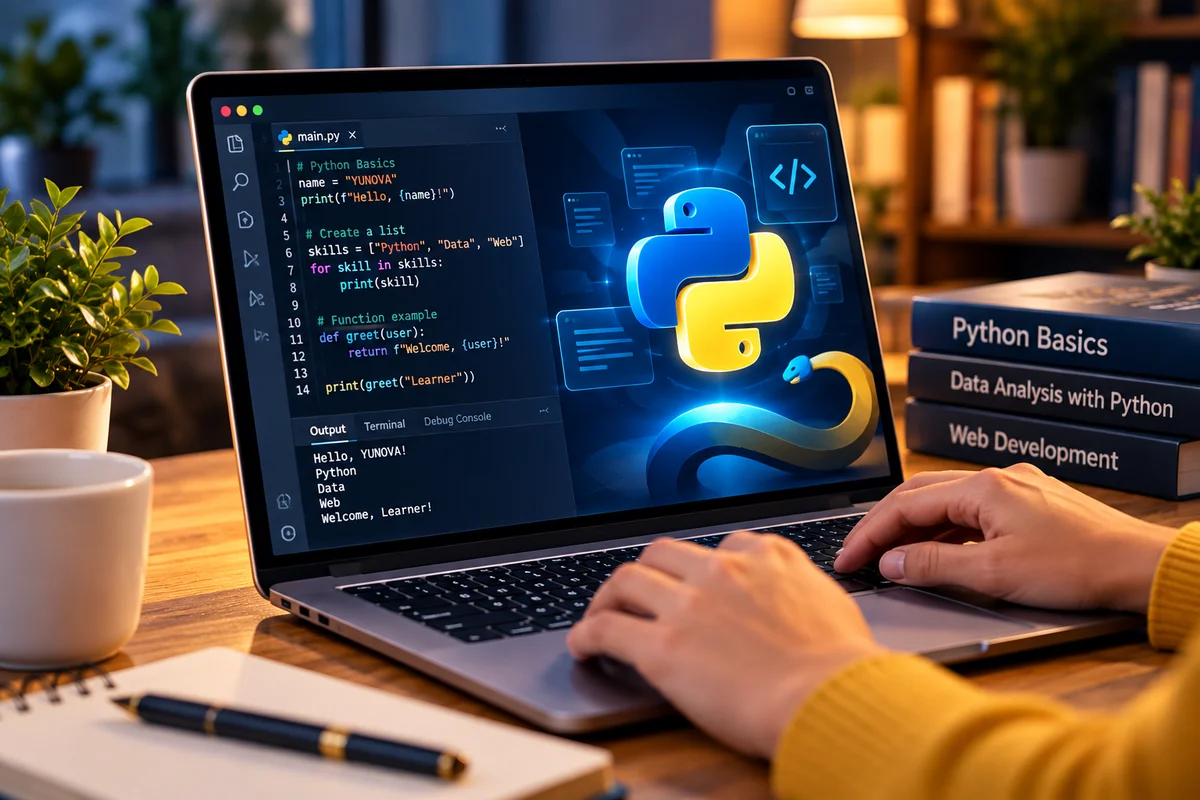
Nobody becomes Guido van Rossum from one course. But the language he designed was meant to be learned by everybody, and its first steps are within anyone's reach. On YUNOVA you can learn Python step by step, for free, in Hindi, at your own pace.
हिंदी में सारांश
गुइडो वैन रॉसम का जन्म 1956 में नीदरलैंड्स में हुआ और उन्होंने University of Amsterdam से mathematics और computer science पढ़ी। उन्होंने चार साल ABC नाम की एक भाषा पर काम किया, जो सफल नहीं हुई, लेकिन उसी से उन्हें Python का विचार मिला। 1991 में उन्होंने Python जारी की, और आज यह दुनिया की सबसे ज़्यादा सीखी जाने वाली programming भाषाओं में है। आप भी YUNOVA पर Python की skill हिंदी में मुफ़्त सीख सकते हैं।
Sourcesस्रोत
- Guido van Rossum - Resume, Guido van Rossum (personal site) (accessed 17 October 2026)
- The History of Python: Personal History - part 1, CWI, Guido van Rossum, The History of Python (accessed 17 October 2026)
- Guido van Rossum: 2018 Fellow, Computer History Museum (accessed 17 October 2026)
- Guido van Rossum - Personal Home Page, Guido van Rossum (personal site) (accessed 17 October 2026)
- Guido van Rossum, Wikipedia (accessed 17 October 2026)
Written by YUNOVA from public sources. Guido van Rossum is not affiliated with and does not endorse YUNOVA.
More storiesऔर कहानियाँ
- Amartya Sen: from Santiniketan to the Nobel, economics for human welfareEconomist and philosopher, 1998 Nobel laureate in economic sciences
- Andrew Ng: the professor who put machine learning online for everyoneCo-founder of Coursera and founding lead of Google Brain
- Andy Jassy: the marketing manager who built Amazon Web ServicesFounding leader of Amazon Web Services and Amazon's CEO