

YUNOVA Stories · Language & Communication
Gulzar: from a Mumbai garage to the Jnanpith Award
Gulzar · Urdu poet, lyricist and film director
Written by YUNOVA from public sources. Gulzar is not affiliated with and does not endorse YUNOVA.यह कहानी YUNOVA ने public sources से लिखी है। इसमें बताए गए व्यक्ति YUNOVA से जुड़े नहीं हैं और YUNOVA का समर्थन नहीं करते।
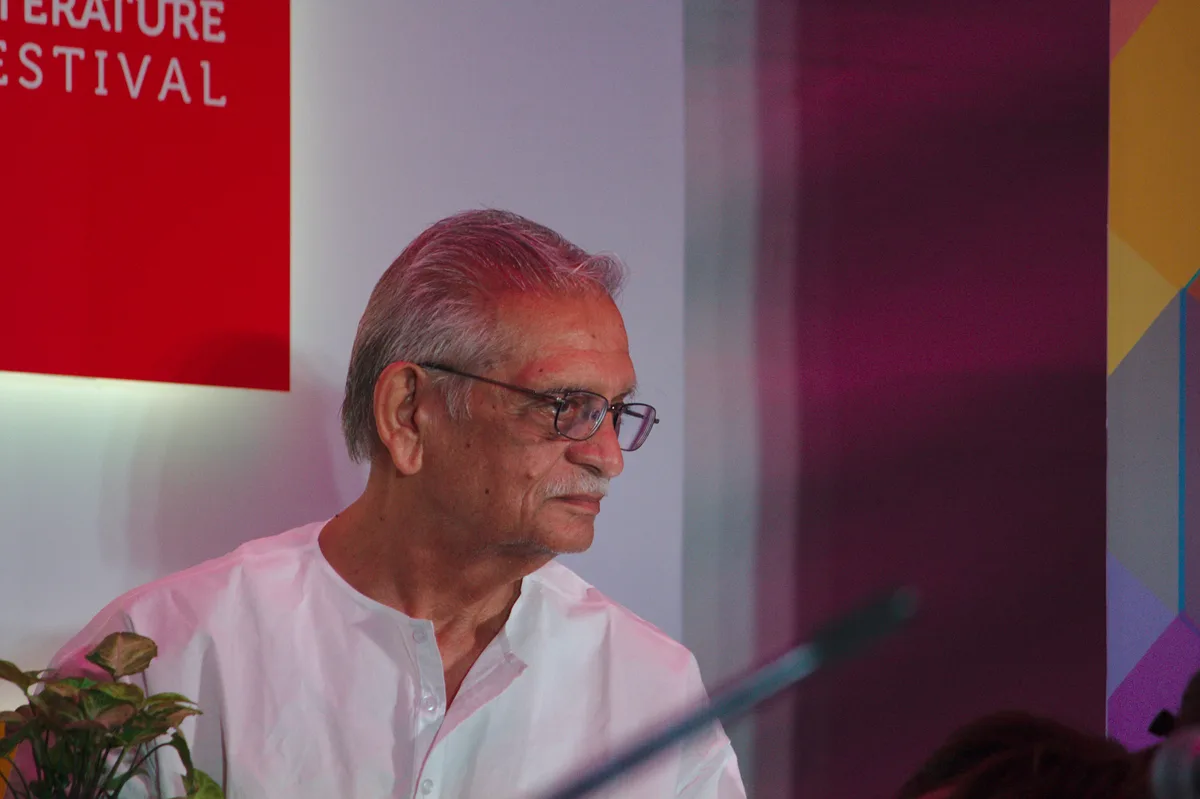
Gulzar was a teenager doing odd jobs in Bombay when he was writing couplets in his spare time. Over more than seven decades he became one of the best-known Urdu poets of his era, a lyricist for Hindi cinema, a film director, and in 2024 a winner of India's highest literary honour, the Jnanpith Award. His story shows how a love of language, fed every day, can grow into a life's work.
A boy from Dina
Gulzar was born Sampooran Singh Kalra in 1934 in Dina, in the Jhelum district of Punjab, now in Pakistan. Gulzar is his pen name. According to a profile published when he won the Jnanpith, he began writing couplets and shayari at an early age, and his father was not pleased about this passion.
Partition split his family. Barely in his teens, the young Sampooran moved to Bombay to help support them. He took odd jobs, including painting dents on cars at a garage on Bellasis Road, near Mumbai Central station.
Books, Sundays and new friends
Alongside the work, he kept reading. The same profile says he read Rabindranath Tagore closely, finished his education, and spent Sundays with the Progressive Writers Association, a group of writers, poets and film people who met regularly in Bombay.
At these meetings he came to know the poet Shailendra and the filmmaker Bimal Roy. The two encouraged him to try a career in films, and Gulzar began working as an assistant to Bimal Roy.
Bandini and a long career in film
Gulzar was at first reluctant to write film songs. Shailendra and the composer S.D. Burman persuaded him to write one for Bimal Roy's film Bandini, released in 1963. Sung by Lata Mangeshkar, it became his first film song and is still remembered today.
More songs followed for films such as Aashirwad, Khamoshi and Guddi. Over the years he worked with many composers, from S.D. Burman, Salil Chowdhury and R.D. Burman to A.R. Rahman and Vishal Bhardwaj. He also wrote dialogues and screenplays.
In 1971 he directed his first film, Mere Apne. He went on to direct films including Koshish, Parichay, Aandhi, Mausam and Libaas, and in 1988 made the television series Mirza Ghalib, about the great Urdu poet, with Naseeruddin Shah in the title role.
He kept working for television too. He made Tahreer Munshi Premchand Ki, about the life of the Hindi and Urdu writer Premchand, and wrote dialogues for children's and family serials such as Jungle Book and Potli Baba Ki. Across all this work he has written in Urdu, Hindi and Punjabi, and the profile counts 22 Filmfare Awards among his honours. He also served as Vice-Chancellor of Assam Central University, a role that took him from the film studio to the classroom.
Honours for a lifetime of words
Gulzar received the Sahitya Akademi Award for Urdu in 2002 and the Padma Bhushan in 2004. The song Jai Ho, which he wrote for the film Slumdog Millionaire, won an Oscar in 2009 and a Grammy in 2010. In 2013 he received the Dadasaheb Phalke Award, and he has won at least five National Film Awards.
In February 2024 the Jnanpith selection committee named him, with the Sanskrit scholar Jagadguru Rambhadracharya, for the 58th Jnanpith Award, for the year 2023. It was only the fifth time the award had gone to Urdu. The committee noted that he created a new form of poetry, the Triveni, a three-line poem without rhyme, and that he has paid serious attention to poetry for children.
The skills and habits that made the difference
The first was writing early and often. Gulzar wrote couplets as a boy, even when his family did not approve, and kept writing through years of odd jobs.
The second was reading widely. While working in Bombay he read Tagore and spent his Sundays among poets and writers. Good writing in any language grows out of a lot of good reading.
The third was learning from people. Shailendra, Bimal Roy and S.D. Burman guided him into film, and he went on to work with generations of composers. He has also kept trying new forms, from film songs to the three-line Triveni to poems for children.
What you can learn from Gulzarइस कहानी से आप क्या सीख सकते हैं
- Write a little every dayGulzar started with short couplets as a boy. When you learn Urdu, write a few lines of your own each day, even if they are simple.
- Read before you writeHe read Tagore and spent time with poets every week. Read Urdu poetry and prose aloud, and notice how words and sounds are put together.
- Find people who share the languageSunday meetings with writers changed his life. Join a group, a class or a community where you can hear and speak Urdu regularly.
- Keep trying new formsFrom songs to screenplays to the three-line Triveni, he kept experimenting. Try short forms first, then stretch yourself with longer pieces.
How you can build this skill on YUNOVAYUNOVA पर आप यह skill कैसे सीख सकते हैं
Nobody becomes Gulzar from one course. But reading, writing and enjoying Urdu is a skill anyone can begin, one letter and one word at a time. On YUNOVA you can learn Urdu step by step, for free, in Hindi.

हिंदी में सारांश
गुलज़ार का जन्म 1934 में दीना में हुआ, जो अब पाकिस्तान में है। बँटवारे के बाद किशोर उम्र में वे बंबई आए और एक garage में गाड़ियों पर रंग करने जैसे काम किए, पर लिखना और पढ़ना नहीं छोड़ा। Bimal Roy की फ़िल्म बंदिनी से उनका फ़िल्मी सफ़र शुरू हुआ, और आगे चलकर उन्हें Oscar, Grammy, दादासाहेब फाल्के पुरस्कार और ज्ञानपीठ पुरस्कार मिले। आप भी YUNOVA पर Urdu की skill हिंदी में मुफ़्त सीखना शुरू कर सकते हैं।
Sourcesस्रोत
- Gulzar: A Bouquet Of Locution, Shayari, Poetry, Lyrics, Screenplays And Direction, Outlook India (IANS) (accessed 18 October 2026)
- Poet and filmmaker Gulzar, and Sanskrit scholar Rambhadracharya win 2023 Jnanpith Award, Scroll.in (accessed 18 October 2026)
- Poet and lyricist Gulzar, Sanskrit scholar Jagadguru Swami Rambhadracharya conferred with Jnanpith Award, Gulf News (accessed 18 October 2026)
- Gulzar, Sanskrit scholar Rambhadracharya selected for Jnanpith Award, DT Next (accessed 18 October 2026)
- Gulzar, Wikipedia (accessed 18 October 2026)
Written by YUNOVA from public sources. Gulzar is not affiliated with and does not endorse YUNOVA.
More storiesऔर कहानियाँ
- Amartya Sen: from Santiniketan to the Nobel, economics for human welfareEconomist and philosopher, 1998 Nobel laureate in economic sciences
- Andrew Ng: the professor who put machine learning online for everyoneCo-founder of Coursera and founding lead of Google Brain
- Andy Jassy: the marketing manager who built Amazon Web ServicesFounding leader of Amazon Web Services and Amazon's CEO