

YUNOVA Stories · Personal Development
Lata Mangeshkar: a voice built on practice
Lata Mangeshkar · Playback singer, Bharat Ratna awardee
Written by YUNOVA from public sources. Lata Mangeshkar is not affiliated with and does not endorse YUNOVA.यह कहानी YUNOVA ने public sources से लिखी है। इसमें बताए गए व्यक्ति YUNOVA से जुड़े नहीं हैं और YUNOVA का समर्थन नहीं करते।
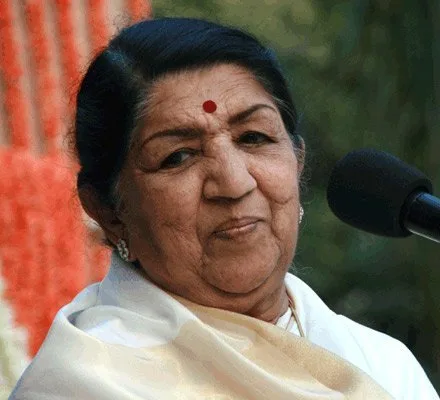
Lata Mangeshkar first learnt music by quietly listening to her father teach his students. At 13 she lost him and had to support her family, and her voice was called too thin by people who could have hired her. She kept learning, kept working long studio days, and became one of the most loved voices India has ever heard.
A child who learnt by listening
Lata Mangeshkar was born in Indore on 28 September 1929. Her father, Deenanath Mangeshkar, was a classical singer and a Marathi theatre actor who also ran a drama company and taught music to students. Lata was the eldest of five children, and all of her younger siblings, including Asha Bhosle, grew up to work in music.
Her first classroom was the house itself. In a 2003 interview with The Tribune, she said she copied the lessons her father gave his students, singing them for the household staff from the kitchen. She also said she was too shy for a long time to sing in front of her father.
When she was about five, her father left a student to practise on his own. Lata heard him singing a composition wrongly, went in, and sang it the right way for him. When her father came to know, he woke her early the next morning, put a tanpura in her hands, and began teaching her properly. She sang with him on stage for the first time in 1938.
“I consider my father my true guru.”
— Lata Mangeshkar, via WION
Supporting a family at 13
In 1942 her father died of heart disease. Lata was 13. She later said that she suddenly became the breadwinner of the family, and the money she earned helped pay for her brothers and sisters to study. A family friend, the film-maker Master Vinayak, helped the family and brought her into Marathi films, where she took small acting roles to earn a living. She did not enjoy acting. What she wanted was to sing.
The first song she recorded for a film, 'Kiti Hasaal' in 1942, was dropped from the final cut. Through Master Vinayak she also began formal lessons in Hindustani classical music with Ustad Aman Ali Khan after the family moved to Bombay. Around 1943 to 1944, during a film shoot in Kolhapur, the famous singer Noor Jahan heard her sing a classical piece, praised her, and told her to keep practising.
Rejection, then a break
Getting work was not easy. In the late 1940s many people felt her voice was too thin for the leading heroines of the time, and she gave trials to many music directors. One film producer turned her down for exactly this reason.
The composer Ghulam Haider believed in her. She remembered standing with him at an empty Malad railway station while he hummed a tune he had made, and he asked her to sing it. He gave her songs in the film Majboor in 1948, and she called him her godfather in music. A year later, 'Aayega Aanewala' from the film Mahal became a huge hit, and composers across the industry began calling her.
She also worked on her language. She told The Tribune that she learnt Urdu diction, and with the composer Naushad she went on to sing one hit after another.
Seven decades of songs
Studio work in those years was hard. Songs were recorded live with big orchestras, sometimes close to a hundred musicians plus a chorus. If even one person made a mistake, everyone had to sing the whole song again. Lata said she would spend long hours in studios, often without food.
On 27 January 1963, months after the war with China, she sang 'Aye Mere Watan Ke Logo' in Delhi in front of Prime Minister Jawaharlal Nehru. The song, written for soldiers who died in that war, is reported to have moved the audience, including Nehru, to tears. In 1974 she became the first Indian to perform at the Royal Albert Hall in London. That same year, Guinness World Records listed her as the most recorded artist.
She sang in Hindi, Marathi, Bengali, Tamil, Kannada, Malayalam and many other languages, and even composed music for Marathi films. She received the Dadasaheb Phalke Award in 1989 and the Bharat Ratna, India's highest civilian honour, in 2001. She was only the second singer to receive it, after M. S. Subbulakshmi.
Lata Mangeshkar passed away in Mumbai on 6 February 2022, at the age of 92, after a month of treatment in hospital. The country observed two days of national mourning.
The skills and habits that made the difference
Ear training came first. Long before she had formal lessons, she had learnt full compositions by listening carefully and copying them. That is why, at about five, she could hear that a grown student was singing the wrong notes.
She had a strong classical base. Lessons with her father, and later with Ustad Aman Ali Khan, gave her the raga training on which her film career was built.
She paid attention to words, not just notes. When she needed better Urdu pronunciation for Hindi film songs, she worked on it until it became a strength.
And she was patient with hard work. Repeating an entire song because of one mistake, through long and hungry studio days, was a normal part of her early working life.
What you can learn from Lata Mangeshkarइस कहानी से आप क्या सीख सकते हैं
- Train your ear before your voiceLata learnt songs by listening closely and copying them. Spend part of every practice session just listening to a line, then try to sing it back note for note.
- Build a classical baseHer film songs rested on years of raga training. Even if you only want to sing film or pop songs, basic swar and raga practice makes your voice steadier.
- Work on your wordsShe improved her Urdu diction when she needed it. Read the lyrics aloud, check how each word is pronounced, and sing them clearly.
- Don't let one 'no' decideHer voice was rejected as too thin before a composer gave her a chance. Keep practising and keep trying when someone says no.
- Repeat until it is rightIn her early studio days, one mistake meant singing the whole song again. Recording yourself and redoing a line until it sounds right is the same habit on a small scale.
How you can build this skill on YUNOVAYUNOVA पर आप यह skill कैसे सीख सकते हैं
Nobody becomes Lata Mangeshkar from one course. But the things she started with, listening carefully, singing swar in tune, and practising every day, are where every singer begins. On YUNOVA you can learn singing step by step in Hindi, at your own pace, with short daily practice that builds your ear and your voice.

हिंदी में सारांश
लता मंगेशकर ने बचपन में अपने पिता को शिष्यों को सिखाते हुए सुनकर संगीत सीखा। सिर्फ़ 13 साल की उम्र में पिता के निधन के बाद उन्होंने परिवार की ज़िम्मेदारी उठाई। शुरुआत में कई लोगों ने उनकी आवाज़ को बहुत पतली कहा, लेकिन उन्होंने सीखना और मेहनत करना नहीं छोड़ा। सुनने का practice, शास्त्रीय संगीत की नींव और शब्दों का साफ़ उच्चारण उनकी ताक़त बने। आप भी YUNOVA पर Singing को रोज़ थोड़े practice के साथ हिंदी में सीख सकते हैं।
Sourcesस्रोत
- The Nightingale of India (Vimla Patil talks to Lata Mangeshkar), The Tribune (accessed 17 October 2026)
- Lata Mangeshkar on the people who influenced her life, WION (accessed 17 October 2026)
- New India Samachar, 1-15 March 2022, page 9, New India Samachar (Government of India) (accessed 17 October 2026)
- Lata Mangeshkar, the legend, the Bharat Ratna awardee, is no more, Moneylife (IANS) (accessed 17 October 2026)
- Legendary singer Lata Mangeshkar dies at 92, The Tribune (accessed 17 October 2026)
- Lata Mangeshkar, Wikipedia (accessed 17 October 2026)
Written by YUNOVA from public sources. Lata Mangeshkar is not affiliated with and does not endorse YUNOVA.
More storiesऔर कहानियाँ
- Amartya Sen: from Santiniketan to the Nobel, economics for human welfareEconomist and philosopher, 1998 Nobel laureate in economic sciences
- Andrew Ng: the professor who put machine learning online for everyoneCo-founder of Coursera and founding lead of Google Brain
- Andy Jassy: the marketing manager who built Amazon Web ServicesFounding leader of Amazon Web Services and Amazon's CEO