

YUNOVA Stories · Money & Finance
Luca Pacioli: the friar who put double-entry bookkeeping in print
Luca Pacioli · Renaissance mathematician who published the first printed account of double-entry bookkeeping
Written by YUNOVA from public sources. Luca Pacioli is not affiliated with and does not endorse YUNOVA.यह कहानी YUNOVA ने public sources से लिखी है। इसमें बताए गए व्यक्ति YUNOVA से जुड़े नहीं हैं और YUNOVA का समर्थन नहीं करते।
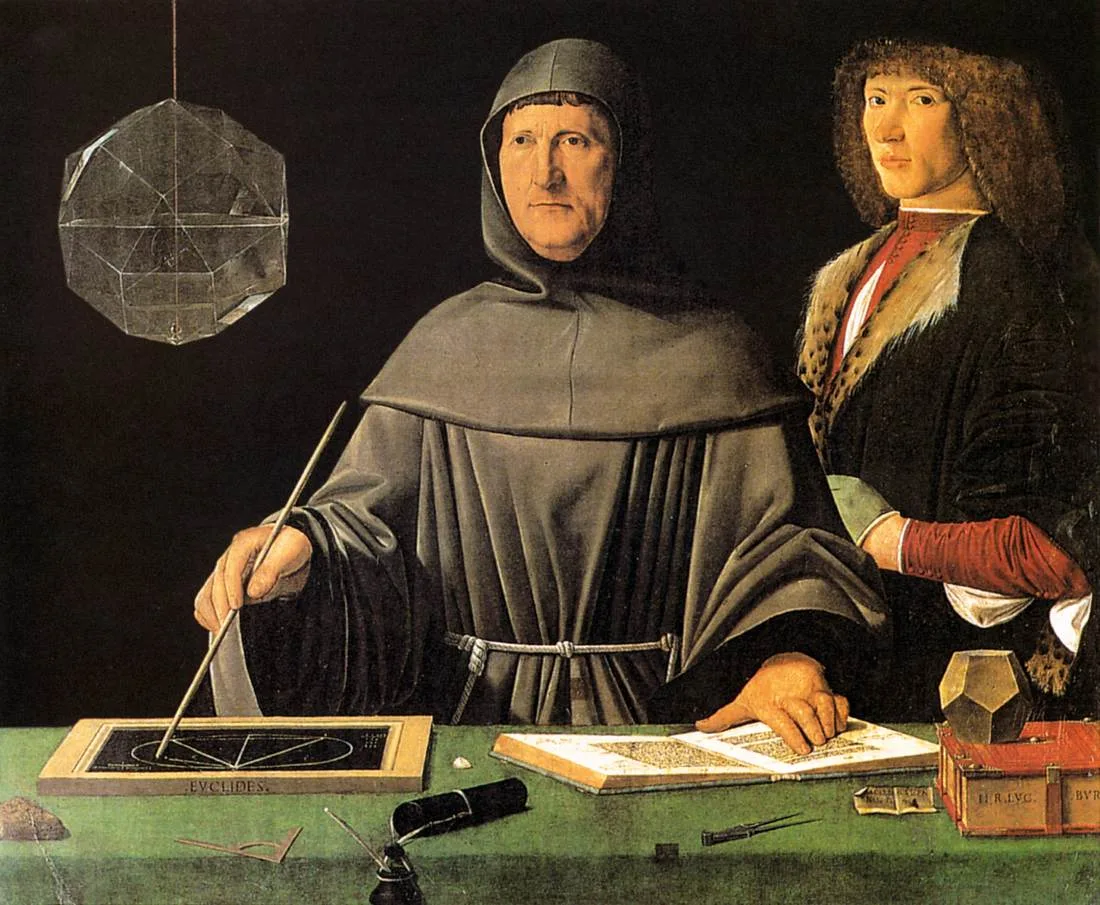
Every time an accountant records a debit and a matching credit, they are following a method that was first set out in print more than five hundred years ago. Luca Pacioli, an Italian mathematician and Franciscan friar, did not invent double-entry bookkeeping, and he never claimed to. What he did was explain the method Venetian merchants already used, clearly enough that it spread across Europe. His story shows how teaching a practical skill well can matter as much as discovering it.
A merchant's tutor in Venice
Pacioli was born in Sansepolcro, a small commercial town in the Tiber valley in Italy, around the middle of the fifteenth century; the exact year is not known, and sources place it in the mid-1440s. Little is recorded about his childhood except that he was brought up by a local family, the Befolci.
As a young man he went to Venice and entered the service of a merchant, Antonio Rompiansi, living in his house and teaching his three sons. At the same time he studied mathematics in the city. The Dictionary of Scientific Biography notes that this mix of business experience and study is what led him to write about arithmetic, and his first work on the subject, written in 1470, was dedicated to the Rompiansi brothers.
Friar and travelling teacher
Some time in the 1470s he became a Franciscan friar. He then spent years teaching mathematics in different Italian cities. From 1477 to 1480 he taught arithmetic at the University of Perugia and wrote a treatise for his students, and he later taught at Naples and Rome before returning to Sansepolcro.
Teaching was the thread through his life. His great book was written in Italian, the language merchants actually spoke, rather than in Latin, so that practical people could use it.
The Summa of 1494
In 1494 his major work was ready, and he went to Venice to supervise its printing. The Summa de arithmetica, geometria, proportioni et proportionalita came off the press of Paganino de Paganini in November 1494. It was an encyclopedia of about six hundred close-printed folio pages, covering arithmetic, the elements of algebra, tables of money, weights and measures used across the Italian states, a summary of Euclid's geometry, and a treatise on bookkeeping.
That treatise, De computis et scripturis, was the first printed work to set out what was called the method of Venice: double-entry bookkeeping. The accounting historian Richard Brown later wrote that the history of bookkeeping in the following century was largely the story of this treatise spreading through the countries of Europe.
The book was not original in most of its mathematics, and Pacioli openly said he had borrowed from earlier writers. But it was widely read. Today the library of the Institute of Chartered Accountants in England and Wales describes its 1494 copy as the earliest known book about double-entry bookkeeping.
Later mathematicians built on it. Gerolamo Cardano wrote a chapter correcting its mistakes while acknowledging his debt to Pacioli, Niccolo Tartaglia modelled a major work on it, and Rafael Bombelli called Pacioli the first mathematician after Fibonacci to throw light on algebra. In 1508, back in Venice, Pacioli lectured on Euclid to a large audience in the Church of San Bartolomeo at the Rialto, and the doge granted him the sole right to publish his works in the republic for fifteen years, with the Summa among them.
Milan, Leonardo and later years
In 1497 Pacioli was invited to teach mathematics at the court of Ludovico Sforza in Milan, where he met Leonardo da Vinci. Leonardo drew the figures of solid shapes for Pacioli's later book, Divina proportione, published in 1509. Pacioli went on to teach Euclid for the University of Pisa in Florence and at Bologna. He died in his home town of Sansepolcro, by most accounts in 1517.
The skills and habits that made the difference
The first was learning from practice. Pacioli worked inside a merchant's household before he wrote about money, so his bookkeeping came from how business was really done.
The second was clear explanation. He did not discover the method; he organised it and wrote it down in the everyday language of his readers. Clarity is a large part of why his version spread.
The third was combining subjects. He was a mathematician who understood trade. Good accountants still need both: comfort with numbers and an understanding of the business behind them.
What you can learn from Luca Pacioliइस कहानी से आप क्या सीख सकते हैं
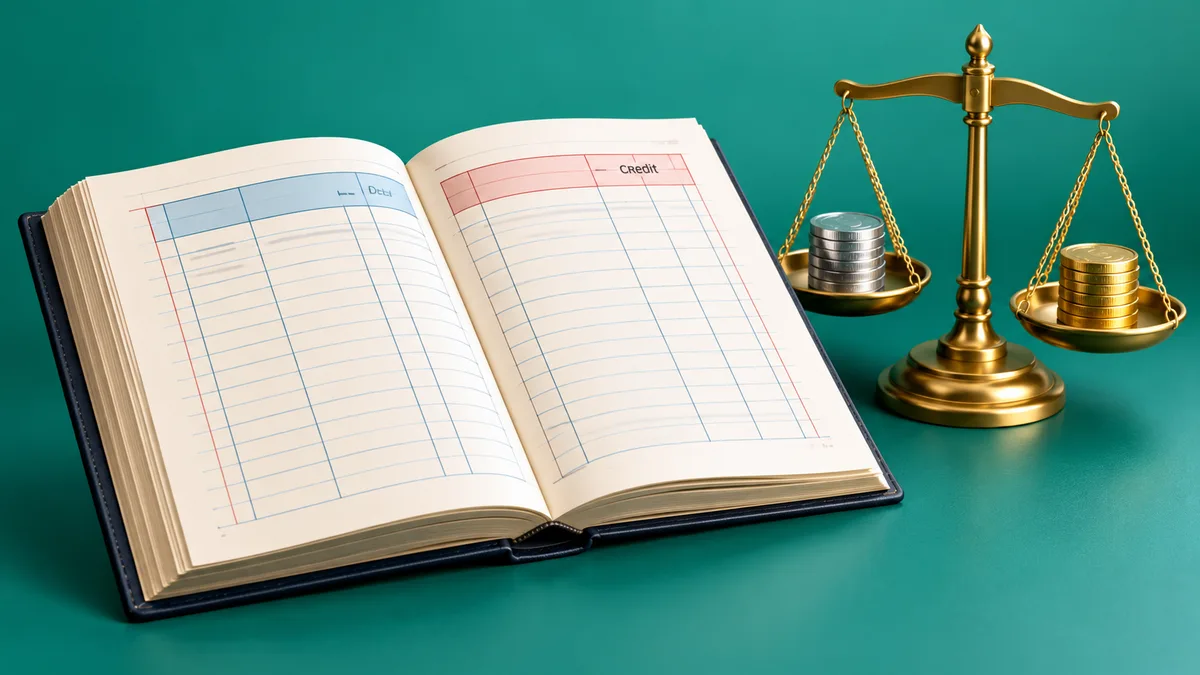
- Every entry has two sidesThe heart of the Venetian method is that each transaction is recorded twice, as a debit and a credit. Learn this idea deeply and most of accounting starts to make sense.
- Learn from real transactionsPacioli learned in a merchant's house. Practise with real examples, such as a small shop's sales and purchases, not just textbook numbers.
- Keep records you can explainHis aim was a method that working people could follow. Write clear narrations for your entries so another person can check your work.
- Respect the basicsDouble entry has lasted five centuries. Software changes, but the logic underneath stays the same, so build that foundation first.
How you can build this skill on YUNOVAYUNOVA पर आप यह skill कैसे सीख सकते हैं
Nobody becomes Luca Pacioli from one course. But the double-entry method he put into print is the same one behind every set of accounts today, and understanding it is a skill anyone can build. On YUNOVA you can learn Accounting step by step, for free, in Hindi.
हिंदी में सारांश
लूका पचोली पंद्रहवीं सदी के इटली के गणितज्ञ और Franciscan friar थे। उन्होंने वेनिस में एक व्यापारी के बेटों को पढ़ाते हुए व्यापार का हिसाब-किताब करीब से देखा। 1494 में छपी उनकी किताब Summa में double-entry bookkeeping का पहला छपा हुआ विवरण था, जिसे वेनिस की पद्धति कहा जाता था। आप भी YUNOVA पर Accounting की skill हिंदी में मुफ़्त शुरू कर सकते हैं।
Sourcesस्रोत
- Pacioli Issues "Summa de arithmetica", the First Great General Work on Mathematics, History of Information (Jeremy M. Norman) (accessed 18 October 2026)
- Pacioli, Luca (Dictionary of Scientific Biography), Encyclopedia.com / Gale (accessed 18 October 2026)
- Historical accounting literature: about the collection, ICAEW Library (accessed 18 October 2026)
- Luca Pacioli, Wikipedia (accessed 18 October 2026)
Written by YUNOVA from public sources. Luca Pacioli is not affiliated with and does not endorse YUNOVA.
More storiesऔर कहानियाँ
- Amartya Sen: from Santiniketan to the Nobel, economics for human welfareEconomist and philosopher, 1998 Nobel laureate in economic sciences
- Andrew Ng: the professor who put machine learning online for everyoneCo-founder of Coursera and founding lead of Google Brain
- Andy Jassy: the marketing manager who built Amazon Web ServicesFounding leader of Amazon Web Services and Amazon's CEO