

YUNOVA Stories · Data & AI
P. C. Mahalanobis: the physicist who taught India to count itself
P. C. Mahalanobis · Statistician, founder of the Indian Statistical Institute
Written by YUNOVA from public sources. P. C. Mahalanobis is not affiliated with and does not endorse YUNOVA.यह कहानी YUNOVA ने public sources से लिखी है। इसमें बताए गए व्यक्ति YUNOVA से जुड़े नहीं हैं और YUNOVA का समर्थन नहीं करते।
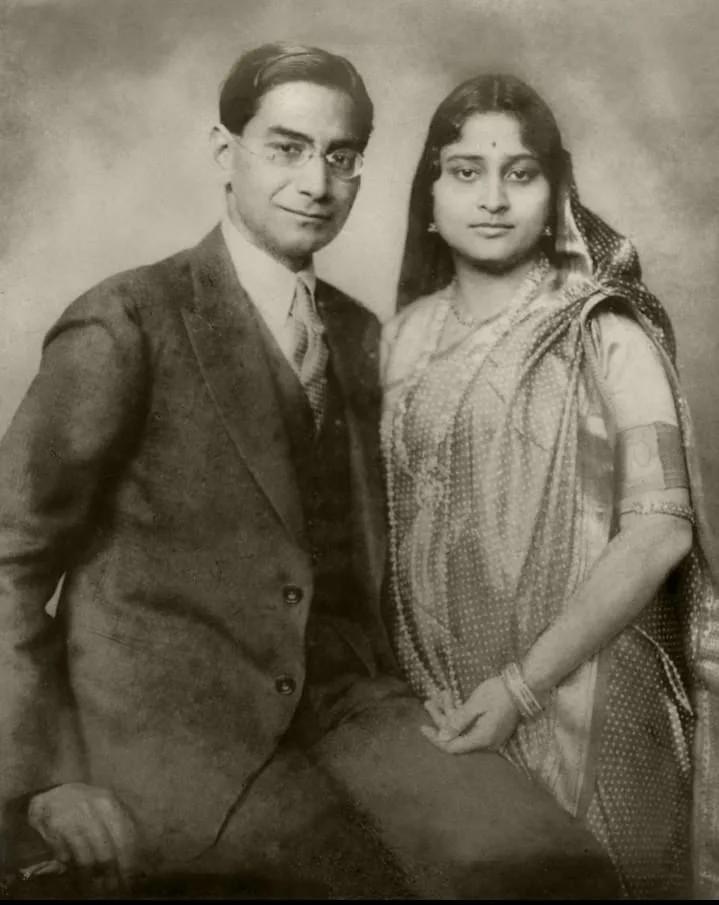
Prasanta Chandra Mahalanobis trained as a physicist at Cambridge, found statistics almost by accident in a college library, and went on to found the Indian Statistical Institute in a single room in Calcutta. His sample surveys showed that a country could learn reliable facts about itself without counting every person, and his work fed directly into India's planning after independence.
A physics student who found a journal
Mahalanobis was born in Calcutta on 29 June 1893. He went to the Brahmo Boys' School, which his grandfather had founded, and then studied physics at Presidency College, completing a BSc with honours in 1912.
In 1913 he joined Cambridge University. The science magazine Bhāvanā records that he took both parts of the Tripos examinations in 1914 and 1915, struggled in the mathematics part, and came first in the physics part. While at Cambridge he became friendly with Srinivasa Ramanujan.
The turning point was small. After his exams he spent time in the library, and his tutor, W. H. Macaulay, showed him bound volumes of Biometrika, a statistics journal edited by Karl Pearson. Mahalanobis bought a complete set, read them on the ship home and kept working through the exercises on his own in Calcutta.
“What at first most strongly attracted my admiration was that the Professor's work was not imitative”
— Ronald Fisher, on Mahalanobis, via vvmwb.org
From a borrowed room to an institute
He meant to visit India briefly in 1915, but the First World War kept him there. Presidency College offered him a temporary teaching post in physics, and he stayed. He became a full professor in 1922 and taught at the college until 1948.
He began applying statistics to whatever problems he met: examination results, weather and the human body. In 1922 he published a study of anthropometric measurements of Anglo-Indians in Calcutta. From this work came the D-squared statistic, now called the Mahalanobis distance, a way of measuring how far apart two groups are while taking into account how their characteristics are related. It is still used in classification, data science and anomaly detection.
When engineers proposed raising embankments after a severe flood in Orissa in 1926, he studied about sixty years of river data and argued that the riverbed had not risen as they believed. Questions like these kept arriving, and colleagues gathered around his statistical laboratory in the physics department. On 17 December 1931 that group became the Indian Statistical Institute, registered as a society in 1932. In 1933 he started Sankhyā, the Indian Journal of Statistics, and edited it for the rest of his life.
Sample surveys and national planning
His best-known practical work was the large-scale sample survey. The Indian Statistical Institute explains that he showed reliable data could be gathered without a complete census. He used carefully chosen samples to estimate crop yields, sending field workers to cut crops in small circles, and extended the method to consumer spending, public opinion and plant disease. After the Bengal famine of 1943 he led a sample survey of its after-effects.
Within the Institute he set up the National Sample Survey, which collected socio-economic and demographic data across the country through continuing surveys. It became so important that the government took it over.
After independence he played a central role in economic planning. According to the Institute, he was a key architect of the Second Five-Year Plan, which emphasised industrialisation and heavy industry and rested on statistical analysis. He was elected a Fellow of the Royal Society and received the Padma Vibhushan. He remained director of the Institute until he died on 28 June 1972, a day before his seventy-ninth birthday.
The skills and habits that made the difference
The first was self-study. Nobody taught him statistics; he worked through Biometrika on his own, alongside a full teaching job in physics.
The second was always starting from a real problem. The Mahalanobis distance came out of measurements of people, and his survey methods came out of the need to know crop yields. University of Minnesota statisticians note that his work could always be linked to some field of application.
The third was building institutions. He did not stop at papers; he created an institute, a journal and a national survey so that others could keep doing the work.
What you can learn from P. C. Mahalanobisइस कहानी से आप क्या सीख सकते हैं
- Use statistics on questions you care aboutMahalanobis analysed exam results and flood records. Pick a small question from your own life, such as how long your commute takes, collect the numbers for a month and summarise them.
- Learn what a good sample isHis surveys worked because samples were chosen carefully. When you study sampling, focus on why random selection matters and how a biased sample can mislead.
- Look beyond simple averagesThe Mahalanobis distance accounts for how variables move together. Once you are comfortable with mean and standard deviation, move on to correlation; it is the doorway to multivariate thinking.
- Let the data speakIn the flood case he checked sixty years of records before disagreeing with the experts. Before you draw a conclusion, look at the data first and test your idea against it.
How you can build this skill on YUNOVAYUNOVA पर आप यह skill कैसे सीख सकते हैं
Nobody becomes P. C. Mahalanobis from one course. But the ideas he worked with every day, such as averages, spread, sampling and correlation, are the foundation of the Statistics skill on YUNOVA, which you can learn for free, in Hindi, at your own pace.

हिंदी में सारांश
प्रशांत चंद्र महालनोबिस ने Cambridge में physics पढ़ी, लेकिन एक journal ने उन्हें statistics की ओर मोड़ दिया। 1931 में उन्होंने कोलकाता में Indian Statistical Institute की स्थापना की और बड़े पैमाने के sample survey का तरीका विकसित किया। Mahalanobis distance आज भी data science में इस्तेमाल होता है, और उन्होंने दूसरी पंचवर्षीय योजना में अहम भूमिका निभाई। आप भी YUNOVA पर Statistics skill हिंदी में मुफ़्त शुरू कर सकते हैं।
Sourcesस्रोत
- Our Founder, Indian Statistical Institute (accessed 18 October 2026)
- Prasanta Chandra Mahalanobis, Bhāvanā (mathematics magazine) (accessed 18 October 2026)
- Prasantha Chandra Mahalanobis, University of Minnesota Morris (accessed 18 October 2026)
- Prasanta Chandra Mahalanobis, vvmwb.org (accessed 18 October 2026)
- Prasanta Chandra Mahalanobis, Wikipedia (accessed 18 October 2026)
Written by YUNOVA from public sources. P. C. Mahalanobis is not affiliated with and does not endorse YUNOVA.
More storiesऔर कहानियाँ
- Amartya Sen: from Santiniketan to the Nobel, economics for human welfareEconomist and philosopher, 1998 Nobel laureate in economic sciences
- Andrew Ng: the professor who put machine learning online for everyoneCo-founder of Coursera and founding lead of Google Brain
- Andy Jassy: the marketing manager who built Amazon Web ServicesFounding leader of Amazon Web Services and Amazon's CEO