

YUNOVA Stories · Data & AI
Raj Reddy: the boy from Katoor who taught computers to listen
Raj Reddy · AI and speech recognition pioneer, 1994 Turing Award laureate
Written by YUNOVA from public sources. Raj Reddy is not affiliated with and does not endorse YUNOVA.यह कहानी YUNOVA ने public sources से लिखी है। इसमें बताए गए व्यक्ति YUNOVA से जुड़े नहीं हैं और YUNOVA का समर्थन नहीं करते।
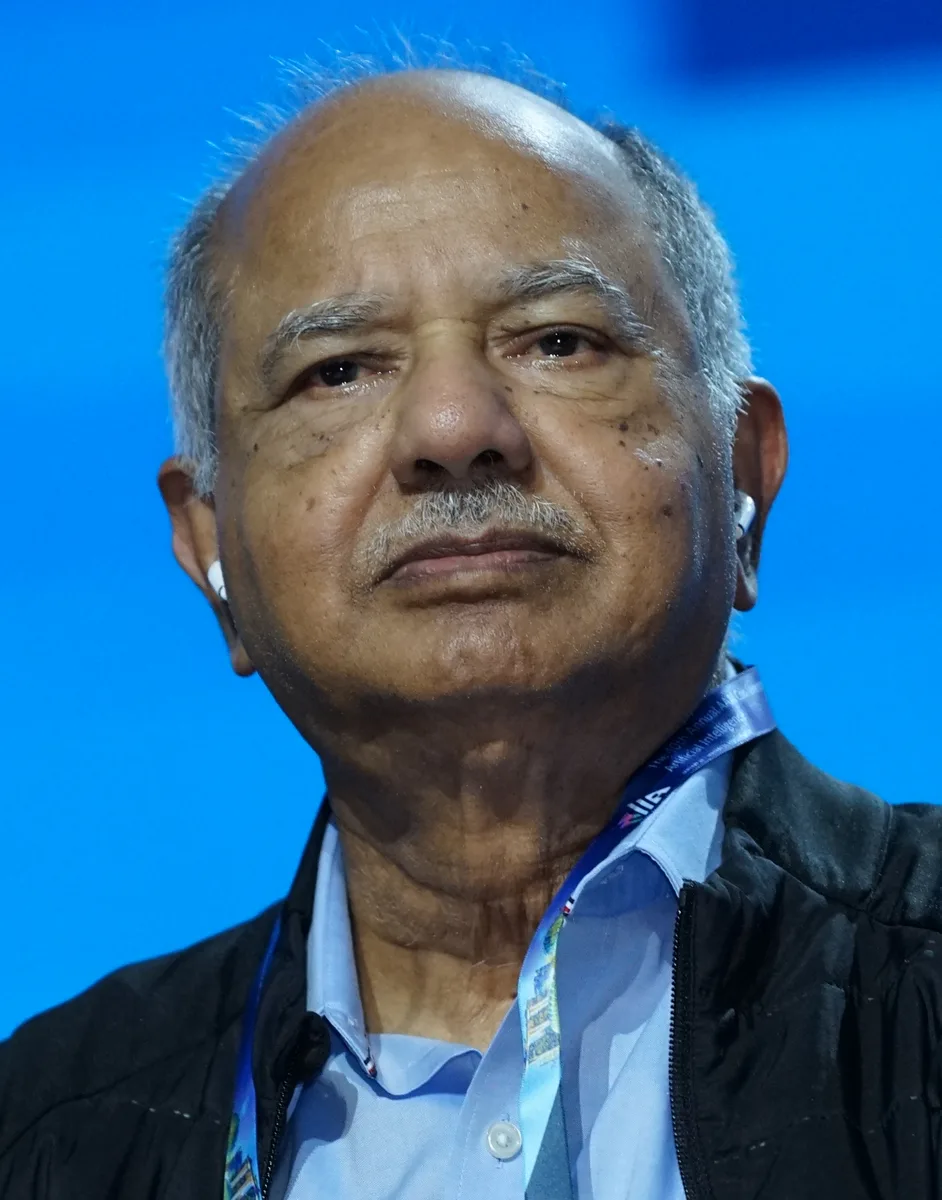
When you speak to your phone and it types your words, you are using ideas that Raj Reddy and his students worked out decades ago. Born in a village in Andhra Pradesh, he studied civil engineering in Madras, met his first computer in Australia, and turned a Stanford class project into a lifetime of work on speech recognition. In 1994 he shared the Turing Award, often called the Nobel Prize of computing. His story shows how one curious question can grow into a whole field.
From Katoor to Australia
Dabbala Rajagopal Reddy was born on 13 June 1937 in Katoor, Andhra Pradesh. His father was an agricultural landlord and his mother a homemaker. He went to the ZP High School at Sri Kalahasti in Chittoor district and earned a degree in civil engineering from Guindy College of Engineering in Madras, now part of Anna University, in 1958.
He then went to Australia as an exchange student and completed a master's degree in technology at the University of New South Wales in Sydney in 1960. For the next three years he worked for IBM in Australia as an Applied Science Representative. The ACM's biography notes that his first encounter with a computer was an English Electric DEUCE.
A class project that lasted a lifetime
In 1963 Reddy joined Stanford University as a PhD student. In early 1964 he began a class project on speech recognition under John McCarthy, one of the founders of artificial intelligence. He used the Stanford AI Lab's new equipment to turn speech waveforms into numbers a PDP-1 computer could process. He later said he chose that project because he was interested in natural languages and what computers could learn about them.
He finished his PhD in 1966, on speech recognition. It was the first PhD awarded by Stanford's newly formed Department of Computer Science. He stayed on as an assistant professor, working on speech, image processing and face recognition.
Carnegie Mellon and the Turing Award
In 1969 he moved to Carnegie Mellon University in Pittsburgh. There he led the university's part of a large speech understanding project funded by DARPA. His teams built a series of systems: Hearsay I, Hearsay II, Harpy and Dragon. Hearsay I was the first system capable of recognising continuous speech, and the ACM says most of the ideas behind modern commercial speech recognition came from this line of work. The blackboard model, a way of letting many sources of knowledge work together, spread across applied AI.
Over three decades he and his colleagues demonstrated voice control of robots, large-vocabulary connected speech recognition, speaker-independent recognition and unrestricted dictation. He became founding director of CMU's Robotics Institute, served as dean of its School of Computer Science from 1991 to 1999, and later led CMU's West Coast campus.
In 1994 he and Edward Feigenbaum received the ACM Turing Award for pioneering large-scale artificial intelligence systems and showing the practical and commercial value of AI. Indiaspora notes that he was the first person of South Asian origin to receive the award. India gave him the Padma Bhushan in 2001, and Japan's Honda Foundation awarded him the Honda Prize in 2005.
He kept a link with India too. He served as chairman of the International Institute of Information Technology, Hyderabad, and his research interests at CMU include voice computing for people who cannot easily read and write.
The skills and habits that made the difference
The first was following curiosity. Reddy picked speech recognition from a list of possible projects because natural language interested him, and that interest carried him for decades.
The second was building working systems. His fame comes not from theory alone but from programs that actually listened, from Hearsay to Dragon, each one improving on the last.
The third was moving between disciplines. He began in civil engineering, learned computing on the job at IBM, and then joined the young field of AI. Each step built on what came before.
The fourth was teamwork. The ACM credits him and his students together. Much of his impact came through the people he trained and the institutes he led.
What you can learn from Raj Reddyइस कहानी से आप क्या सीख सकते हैं
- Start with one clear problemReddy's lifetime of work began with one question: can a computer understand speech? When you learn AI, pick one task, like sorting messages or recognising images, and follow it deeply.
- Your first degree does not limit youHe studied civil engineering and worked with computers only after college. Whatever your background, the basics of AI are open to you.
- Build, test and improveEach of his speech systems fixed problems in the one before. Try small AI tools yourself, notice where they fail, and learn why.
- Think about who the technology servesReddy has worked on voice computing for people who cannot easily read. As you learn AI, ask how it could help people around you, not only people like you.
How you can build this skill on YUNOVAYUNOVA पर आप यह skill कैसे सीख सकते हैं
Nobody becomes Raj Reddy from one course. But the core ideas of artificial intelligence, how machines learn from data and where they go wrong, are something anyone can begin to understand. On YUNOVA you can learn AI Fundamentals step by step, for free, in Hindi.
हिंदी में सारांश
राज रेड्डी का जन्म 1937 में आंध्र प्रदेश के कटूर गाँव में हुआ और उन्होंने मद्रास से civil engineering पढ़ी। Stanford में एक class project से उन्होंने speech recognition पर काम शुरू किया, जो उनके जीवन का काम बन गया। Carnegie Mellon में उनकी टीम ने ऐसे systems बनाए जिनसे आज की speech recognition technology के कई विचार आए, और 1994 में उन्हें Turing Award मिला। आप भी YUNOVA पर AI Fundamentals की skill हिंदी में मुफ़्त सीखना शुरू कर सकते हैं।
Sourcesस्रोत
- Raj Reddy: A.M. Turing Award Laureate, Association for Computing Machinery (accessed 18 October 2026)
- Raj Reddy, The Robotics Institute, Carnegie Mellon University (accessed 18 October 2026)
- Raj Reddy Wins the Turing Award for Pioneering Artificial Intelligence, Indiaspora (accessed 18 October 2026)
- Honda Prize 2005: Dr. Raj Reddy, Honda Foundation (accessed 18 October 2026)
- Prof. Raj Reddy, Center for Study of Science, Technology and Policy (CSTEP) (accessed 18 October 2026)
- Raj Reddy, Wikipedia (accessed 18 October 2026)
Written by YUNOVA from public sources. Raj Reddy is not affiliated with and does not endorse YUNOVA.
More storiesऔर कहानियाँ
- Amartya Sen: from Santiniketan to the Nobel, economics for human welfareEconomist and philosopher, 1998 Nobel laureate in economic sciences
- Andrew Ng: the professor who put machine learning online for everyoneCo-founder of Coursera and founding lead of Google Brain
- Andy Jassy: the marketing manager who built Amazon Web ServicesFounding leader of Amazon Web Services and Amazon's CEO