

YUNOVA Stories · Design & Creative
Raja Ravi Varma: the painter who put art into every Indian home
Raja Ravi Varma · Painter of Indian epics and founder of the Ravi Varma printing press
Written by YUNOVA from public sources. Raja Ravi Varma is not affiliated with and does not endorse YUNOVA.यह कहानी YUNOVA ने public sources से लिखी है। इसमें बताए गए व्यक्ति YUNOVA से जुड़े नहीं हैं और YUNOVA का समर्थन नहीं करते।
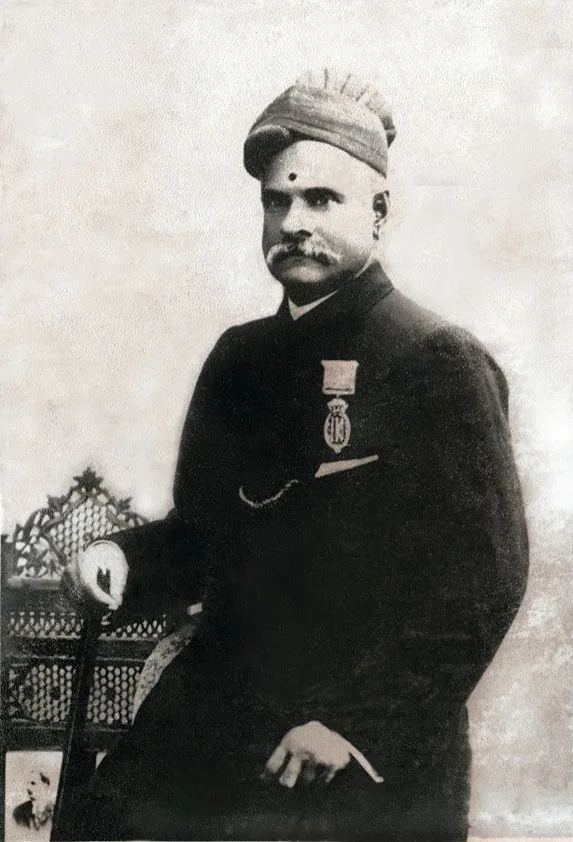
Raja Ravi Varma grew up in a small estate in Kerala, drew on the walls of his family home as a boy, and taught himself to paint in oils when nobody would show him how. He used that skill to paint scenes from the Indian epics and the women of his time in a new, lifelike style. Then he did something few painters of his day thought of: he started a printing press so that ordinary families could hang his pictures at home.
A boy who drew on the walls
Ravi Varma was born on 29 April 1848 into an aristocratic family at Kilimanoor, in the princely state of Travancore, in what is now Kerala. His father was a Sanskrit scholar, and the boy grew up hearing the Puranas, the Mahabharata and the Ramayana, the stories that would later fill his canvases.
As a child he drew on the walls of the family house with chalk and charcoal. His uncle, the painter Raja Raja Varma, noticed and gave him his first informal lessons. Art was already part of the family: the Deccan Chronicle notes that his uncle was an artist and that a nephew later became one too.
Learning oil painting the hard way
Around 1862, when he was about fourteen, he went to the Travancore court under the patronage of Maharaja Ayilyam Thirunal, who let him watch the palace painters at work. He trained in watercolour under the court painter Rama Swamy Naidu, but Naidu refused to teach him how to paint in oils. An assistant, Arumugham Pillai, showed him the basics informally.
From 1868 he could watch the British portrait painter Theodore Jensen at the court, though Jensen too would not give him lessons. With no art school open to him, he spent roughly nine years teaching himself technique, mixing colours and perspective by trial and error. Historians still describe him as largely self-taught in oils, while pointing out that he learned from everyone and everything around him, from European paintings to Tanjore temple art.
The work paid off. His 1873 painting Nair Lady Adorning Her Hair won the Governor's Gold Medal at the Madras Fine Art Exhibition. Royal commissions followed, including from the Maharaja of Baroda, and in 1893 he showed a series of oil paintings at the World's Columbian Exposition in Chicago, where he received at least two medals.
Indian stories in a new style
Varma used realistic proportions, perspective, and light and shadow, ideas that came from Western painting, but his subjects were Indian: scenes from the epics, gods and goddesses in human form, and women in saris with jasmine in their hair. A descendant of the artist told Gulf News that he was the first Indian artist to work in oil paints rather than traditional natural pigments.
His way of showing the deities as full, three-dimensional figures was so widely accepted that it overshadowed many older styles of religious pictures.
A press for the common home
Original oil paintings could only be bought by the rich and powerful. Seeing how people queued to look at his work, Varma wanted ordinary families to own it too. In 1894, on the advice of the Dewan T. Madhava Rao, he started a lithographic printing press in Ghatkopar, near Bombay, with his brother Raja Varma working alongside him.
The press turned his paintings into inexpensive colour prints called oleographs. Making each one was skilled, slow work: lithographers had to etch the outline for every colour on separate limestone slabs, often sixteen to twenty-four of them, and print them in perfect alignment. Estimates of how many of his paintings were printed range from 132 to around 134, with some runs as small as six copies and others as large as three thousand.
Prints of gods, goddesses and epic heroines reached homes across India. Later, when his images were copied on to calendars and advertisements, some critics dismissed them as calendar art, but collectors and museums now treat the prints as an important part of Indian art history. In 1904 the Viceroy, Lord Curzon, gave him the Kaisar-i-Hind Gold Medal. Ravi Varma died on 2 October 1906, at the age of 58.
The skills and habits that made the difference
The first was drawing all the time. Long before any lesson, he was drawing on walls with whatever he had. That early, constant practice gave his hand the control that oil painting later demanded.
The second was learning without permission. When teachers refused to share their methods, he watched, experimented and kept going for years. Colour mixing and perspective were things he worked out on his own canvas.
The third was painting what he knew. He grew up with the epics and the people of Kerala, and that is what he painted, using new techniques to tell old stories.
The fourth was thinking about who could see the work. The press showed that reaching people mattered to him as much as the painting itself.
What you can learn from Raja Ravi Varmaइस कहानी से आप क्या सीख सकते हैं
- Draw every day, on anythingVarma started with chalk and charcoal on walls. Keep a cheap sketchbook and fill it; the skills of seeing shape and proportion grow with volume, not with costly materials.
- Teach yourself by doingHe spent years mixing colours and testing perspective by trial and error. When a video shows a technique, pause and copy it on paper straight away, then try it again without the video.
- Study many stylesEuropean portraits, Tanjore art and Kathakali staging all shaped his pictures. Look closely at different kinds of art and borrow what works for you.
- Paint the world you knowHis strongest work came from stories and people he grew up with. Your street, your family and your festivals are good subjects too.
How you can build this skill on YUNOVAYUNOVA पर आप यह skill कैसे सीख सकते हैं
Nobody becomes Raja Ravi Varma from one course. But the habits behind his work, drawing often, practising colour and light, and looking hard at the world, are ones any learner can start today. On YUNOVA you can learn the Painting skill step by step, for free, in Hindi.
हिंदी में सारांश
राजा रवि वर्मा का जन्म 1848 में केरल के किलिमानूर में हुआ और बचपन में वे घर की दीवारों पर चित्र बनाते थे। जब दरबार के चित्रकारों ने उन्हें oil painting सिखाने से मना कर दिया, तो उन्होंने लगभग नौ साल खुद practice करके यह कला सीखी। 1894 में उन्होंने एक printing press शुरू की, ताकि उनकी तस्वीरें आम घरों तक पहुँच सकें। आप भी YUNOVA पर Painting की skill हिंदी में मुफ़्त सीखना शुरू कर सकते हैं।
Sourcesस्रोत
- Raja Ravi Varma, Masterworks Academy (accessed 18 October 2026)
- The Printmaker: Varma's artistic legacy, Deccan Chronicle (accessed 18 October 2026)
- The undisputed sovereign of Indian realism, Gulf News (accessed 18 October 2026)
- Raja Ravi Varma, Wikipedia (accessed 18 October 2026)
Written by YUNOVA from public sources. Raja Ravi Varma is not affiliated with and does not endorse YUNOVA.
More storiesऔर कहानियाँ
- Amartya Sen: from Santiniketan to the Nobel, economics for human welfareEconomist and philosopher, 1998 Nobel laureate in economic sciences
- Andrew Ng: the professor who put machine learning online for everyoneCo-founder of Coursera and founding lead of Google Brain
- Andy Jassy: the marketing manager who built Amazon Web ServicesFounding leader of Amazon Web Services and Amazon's CEO