YUNOVA Stories · Personal Development
Ratan Tata: from the steel shop floor to leading the Tata Group
Ratan Tata · Industrialist, former chairman of Tata Sons and philanthropist
Written by YUNOVA from public sources. Ratan Tata is not affiliated with and does not endorse YUNOVA.यह कहानी YUNOVA ने public sources से लिखी है। इसमें बताए गए व्यक्ति YUNOVA से जुड़े नहीं हैं और YUNOVA का समर्थन नहीं करते।
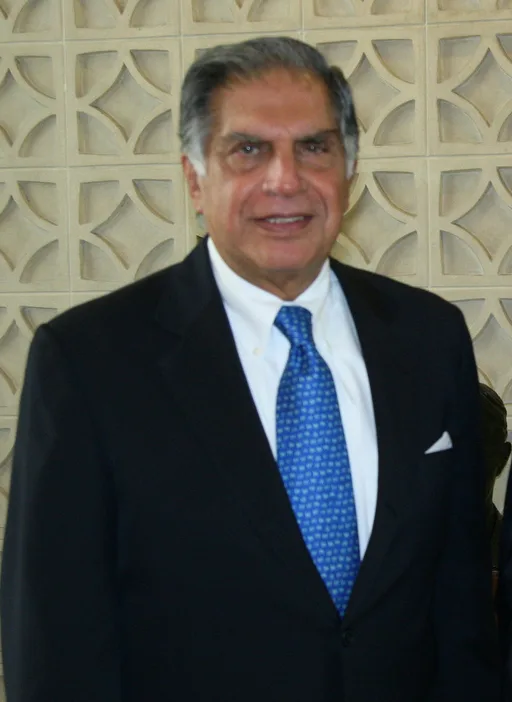
Ratan Tata was born into one of India's best-known business families, yet he began his career working on the shop floor of a steel plant in Jamshedpur. He went on to lead the Tata Group from 1991 to 2012 and took it onto the world stage. He was remembered for his humility, his care for people and his quiet way of leading.
Early years and an architect's training
Ratan Naval Tata was born on 28 December 1937 in Bombay, now Mumbai. When he was about ten, his parents separated, and he was raised by his grandmother, Navajbai Tata.
He went to the United States to study and earned a bachelor's degree in architecture from Cornell University in 1962. Cornell's architecture school later remembered him as a valued member of its alumni community and its advisory council.
“I knew I wanted to do more for these families”
— Ratan Tata, via Outlook Business
Starting at the bottom
After his studies, Ratan Tata turned down a job offer from IBM and joined the Tata Group in the early 1960s. He did not start in a big office. He began on the shop floor of Tata Steel in Jamshedpur, working alongside the people who kept the plant running.
In 1971 he became director of National Radio and Electronics, known as NELCO, a Tata company that he worked to turn around. It was one of his first chances to lead a business on his own.
In 1975, at the age of 37, he went back to the classroom. He attended the Advanced Management Program at Harvard Business School, a course for senior managers. Years later, Harvard noted that he called the school the best place to be exposed to the world's leading thinking on management and leadership.
Leading the Tata Group
In 1991, Ratan Tata succeeded J. R. D. Tata as chairman of Tata Sons. He led the group for more than two decades, until he retired at the end of 2012 at the age of 75. During this time the group grew in areas such as information technology, steel, cars and hotels.
He was not afraid of bold moves. Under his leadership, Tata companies bought the British tea brand Tetley, the European steel maker Corus, and, in June 2008, Jaguar and Land Rover from Ford for 2.3 billion US dollars. These deals helped turn an India-focused group into a global one.
He also backed products made for Indian families. He led the Tata Indica car project, and in 2008 the Tata Nano was introduced as a low-cost car for the masses. He said the idea came after he saw a family of four riding a motorbike through heavy rain in Bombay. He felt such families were taking risks only because they had no better choice, and he wanted to give them one.
Care in difficult times, and a life of giving
In November 2008, terrorists attacked Mumbai, including the Taj Mahal Palace hotel owned by the Tata Group. After the attacks, Ratan Tata set up the Taj Public Service Welfare Trust to support victims and their families.
Ratan Tata also led the Tata Trusts, which own a majority stake in Tata Sons and fund work in education, health care, rural development and more. Gifts from Tata trusts paid for Tata Hall, a building at Harvard Business School. In his later years he personally invested in dozens of young Indian startups, and he was well known for his love of dogs, including the strays cared for at Bombay House, the Tata headquarters.
He received the Padma Bhushan in 2000 and the Padma Vibhushan in 2008. Ratan Tata died on 9 October 2024 at Breach Candy Hospital in Mumbai, at the age of 86. Leaders across India paid tribute to his humility and his commitment to the country.
The skills and habits that made the difference
He learned the business from the ground up. Starting on a steel plant floor gave him first-hand knowledge of how work is really done and of the people who do it. Leaders who understand the ground reality can make better decisions.
He kept learning in the middle of his career. Going to Harvard at 37, years after his degree and while already working in a senior role, shows that learning does not have to stop when college ends.
He thought about the people his products served. By his own account, the Nano began with a family on a motorbike in the rain. He looked for problems in ordinary lives and asked how a business could help.
He gave back. Through the Tata Trusts, through support for victims after 26/11, and through his backing of young founders, he showed that a leader's work is measured by its effect on others, not only by profits.
What you can learn from Ratan Tataइस कहानी से आप क्या सीख सकते हैं
- Start where the work happensRatan Tata began on the shop floor, not in a cabin. Whatever field you choose, spend time understanding the basic work and the people who do it.
- Keep learning at every stageHe went back to study at Harvard at 37. You can always add new skills, whether you are 17, 37 or 57.
- Solve real problemsThe Nano came from watching a family ride in the rain. Look around you for everyday problems, and think about how your skills could help.
- Be brave, and accept riskBuying large companies abroad, like Corus and Jaguar Land Rover, were bold decisions. Good leaders take thoughtful risks and learn from the results, good or bad.
- Lead with kindnessHe is remembered as much for his humility and care as for his business deals. Treat people well, and they will remember it.
How you can build this skill on YUNOVAYUNOVA पर आप यह skill कैसे सीख सकते हैं
Nobody becomes Ratan Tata from one course. But the leadership skills behind his story, like taking responsibility, listening to people, making decisions and thinking long term, can be practised by anyone, in college, at work or in the community. On YUNOVA you can learn Leadership step by step, in Hindi, at your own pace.

हिंदी में सारांश
रतन टाटा का जन्म 1937 में मुंबई में हुआ था। बड़े परिवार से होने के बावजूद उन्होंने अपना करियर जमशेदपुर में Tata Steel के shop floor पर काम करके शुरू किया। 1991 से 2012 तक उन्होंने Tata Group का नेतृत्व किया और उसे दुनिया भर में पहचान दिलाई। अक्टूबर 2024 में उनका निधन हुआ, और देश ने उनकी विनम्रता और सेवा भाव को याद किया। आप भी YUNOVA पर Leadership की skill हिंदी में सीख सकते हैं और अपने आसपास के लोगों के लिए बेहतर नेतृत्व कर सकते हैं।
Sourcesस्रोत
- Business titan Ratan Tata, former leader of Indian conglomerate Tata Group, dies at age 86 (AP), PBS NewsHour / Associated Press (accessed 17 October 2026)
- Ratan Tata: The Business Legend Who Captured India's Heart, Outlook Business (accessed 17 October 2026)
- Business School to dedicate Tata Hall, The Harvard Gazette (accessed 17 October 2026)
- Tag: Tata, Cornell University College of Architecture, Art, and Planning (accessed 17 October 2026)
- Obituary: Shri Ratan Tata, Indian National Academy of Engineering (accessed 17 October 2026)
- New India Samachar, 1-15 November 2024 (obituary page), New India Samachar, Government of India (accessed 17 October 2026)
- Ratan Tata, Wikipedia (accessed 17 October 2026)
Written by YUNOVA from public sources. Ratan Tata is not affiliated with and does not endorse YUNOVA.
More storiesऔर कहानियाँ
- Amartya Sen: from Santiniketan to the Nobel, economics for human welfareEconomist and philosopher, 1998 Nobel laureate in economic sciences
- Andrew Ng: the professor who put machine learning online for everyoneCo-founder of Coursera and founding lead of Google Brain
- Andy Jassy: the marketing manager who built Amazon Web ServicesFounding leader of Amazon Web Services and Amazon's CEO