

YUNOVA Stories · Design & Creative
R. K. Laxman: the Common Man and a cartoon for every morning
R. K. Laxman · Cartoonist, creator of the Common Man in The Times of India
Written by YUNOVA from public sources. R. K. Laxman is not affiliated with and does not endorse YUNOVA.यह कहानी YUNOVA ने public sources से लिखी है। इसमें बताए गए व्यक्ति YUNOVA से जुड़े नहीं हैं और YUNOVA का समर्थन नहीं करते।
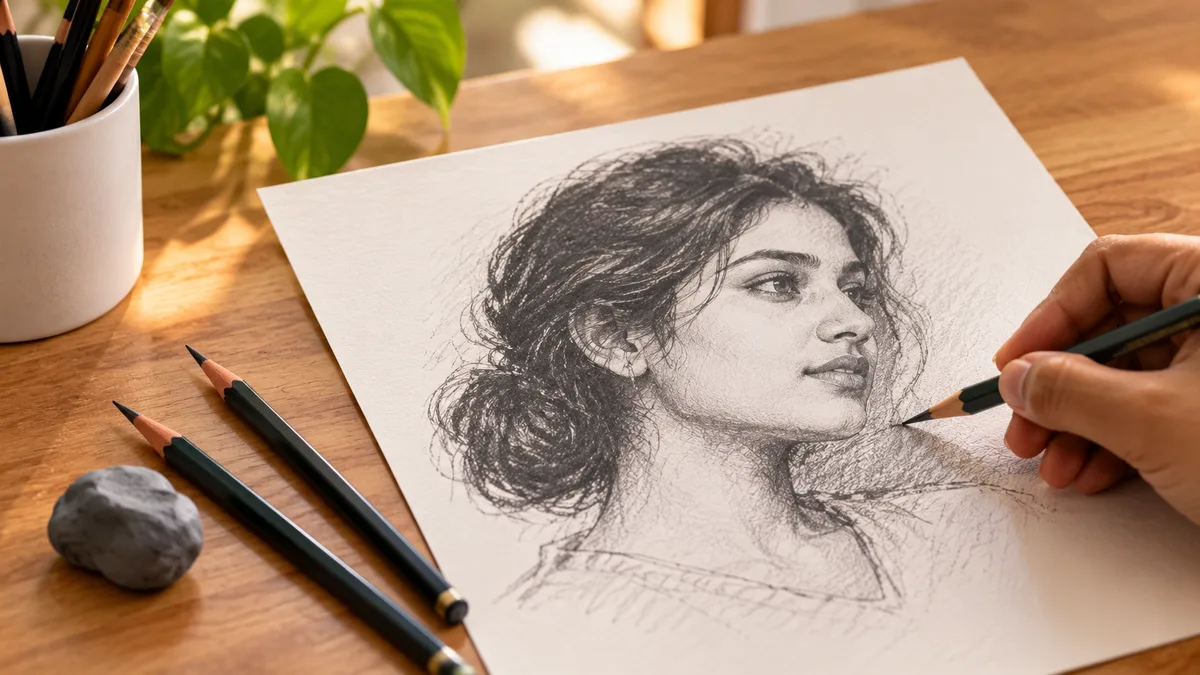
R. K. Laxman began sketching as a small child in Mysore, was turned down by the art school he wanted to join, and went on to draw a daily cartoon on the front page of The Times of India for about five decades. His silent, bespectacled Common Man became one of the best-known drawings in India. His story is a lesson in what drawing every day, for years, can build.
A boy who drew on everything
Rasipuram Krishnaswamy Iyer Laxman was born in Mysore in 1921. Most sources give his birthday as 24 October; at least one gives 15 August. His father was a school headmaster, and Laxman was the youngest of six sons. One of his elder brothers was R. K. Narayan, who became one of India's best-known writers in English.
According to AFP, he began sketching when he was only five. Indian Link writes that he drew on any surface he could find, from books and tables to floors and walls. Even before he could read, he was absorbed in the illustrations of British magazines such as Punch and The Strand, and he was also influenced by the cartoons of the British cartoonist David Low that appeared in The Hindu.
His father suffered a stroke and died about a year later. His elder brothers took on the running of the house, and Laxman carried on with school.
Rejected, but still drawing
After school he applied to the J. J. School of Art in Bombay, hoping to study drawing and painting. He was turned down. Instead he studied at Maharaja College in Mysore and took a B.A. from the University of Mysore.
He did not stop drawing while he studied. He sent freelance work to publications such as Swarajya, drew political cartoons for local papers and for Swatantra, contributed to the Kannada humour magazine Koravanji, and illustrated his brother Narayan's stories in The Hindu.
The Common Man, every day
His first full-time job was as a political cartoonist at The Free Press Journal in Bombay. Then he moved to The Times of India, and in 1951 he began the daily cartoon series You Said It. Its central figure was the Common Man: balding, moustached, in a checked coat, a silent observer of events. AFP reported that Laxman said the character stood for all Indians.
Laxman's cartoons appeared on the front page for about five decades. Indian Link repeats a story, told in the media, that when he once retired, readers wrote and called the newspaper until his cartoon came back. In 1954 he also created Gattu, a mascot for Asian Paints, and he drew the sketches for the television version of his brother's Malgudi Days. He also wrote a few novels, and his cartoons appeared in the Hindi film Mr. & Mrs. 55.
Over the years he drew almost every major public figure. Indian Link recalls how each leader became a few signature lines in his hands, such as a bald head for one prime minister and a long pointed nose for another. A selection of his political cartoons from the Nehru to the Rajiv Gandhi years was published as The Eloquent Brush.
His work was collected in many volumes, and he received the Padma Bhushan and, in 2005, the Padma Vibhushan. In 2001 a bronze statue of the Common Man, about eight feet tall, was unveiled in Pune.
A stroke in September 2003 left him partly paralysed, and in time he stopped drawing. R. K. Laxman died in Pune on 26 January 2015.
The skills and habits that made the difference
The first was quantity. A daily cartoon means a new idea and a finished drawing every single day. Laxman kept up that pace for decades, and his pocket cartoons filled volume after volume.
The second was observation. Indian Link describes his knack for picking out one or two features of a face, such as a bald head, a pointed nose or a grin, that made a person instantly recognisable. That comes from looking closely at people, again and again.
The third was learning from other artists. Before he could read he was studying the drawings in magazines, and he was influenced by the work of David Low. When the art school said no, he kept drawing anyway.
What you can learn from R. K. Laxmanइस कहानी से आप क्या सीख सकते हैं
- Draw every day, even smallLaxman's daily cartoon was a small box on the front page. A small drawing done every day teaches more than a big drawing done once a month. Keep a sketchbook and fill one page a day.
- One rejection is not the endThe art school turned him down. He studied something else and drew for newspapers instead. If a class or a contest says no, keep drawing; your sketchbook does not need permission.
- Look for the one feature that mattersHis caricatures worked because he found the detail that made a face unmistakable. When you draw people, look for the shape that is most theirs before you add anything else.
- Study the artists you admireHe grew up poring over the drawings in magazines and the cartoons of David Low. Copying a drawing you love, line by line, is one of the oldest ways to learn how it was made.
How you can build this skill on YUNOVAYUNOVA पर आप यह skill कैसे सीख सकते हैं
Nobody becomes R. K. Laxman from one course. But every one of his cartoons rested on the basics: line, shape, proportion and the habit of looking closely. YUNOVA's Drawing skill lets you build those basics step by step, for free, in Hindi, with a little practice each day.
हिंदी में सारांश
आर. के. लक्ष्मण ने मैसूर में पाँच साल की उम्र से चित्र बनाना शुरू किया। आर्ट स्कूल ने उन्हें दाख़िला नहीं दिया, फिर भी उन्होंने ड्रॉइंग नहीं छोड़ी। 1951 से लगभग पचास साल तक उन्होंने The Times of India में Common Man वाले कार्टून बनाए। आप भी YUNOVA पर Drawing skill हिंदी में मुफ़्त शुरू कर सकते हैं और रोज़ थोड़ी practice कर सकते हैं।
Sourcesस्रोत
- Indian cartoonist R.K. Laxman dies aged 94, The Peninsula (AFP) (accessed 18 October 2026)
- R.K. Laxman: The Uncommon Man passes into history, Indian Link (accessed 18 October 2026)
- Cartoonist & 'Common Man' creator RK Laxman passes away, Indian Television Dot Com (accessed 18 October 2026)
- R. K. Laxman, Wikipedia (accessed 18 October 2026)
Written by YUNOVA from public sources. R. K. Laxman is not affiliated with and does not endorse YUNOVA.
More storiesऔर कहानियाँ
- Amartya Sen: from Santiniketan to the Nobel, economics for human welfareEconomist and philosopher, 1998 Nobel laureate in economic sciences
- Andrew Ng: the professor who put machine learning online for everyoneCo-founder of Coursera and founding lead of Google Brain
- Andy Jassy: the marketing manager who built Amazon Web ServicesFounding leader of Amazon Web Services and Amazon's CEO