

YUNOVA Stories · Design & Creative
Satyajit Ray: the ad agency designer who became a great filmmaker
Satyajit Ray · Filmmaker, illustrator and typeface designer from Kolkata
Written by YUNOVA from public sources. Satyajit Ray is not affiliated with and does not endorse YUNOVA.यह कहानी YUNOVA ने public sources से लिखी है। इसमें बताए गए व्यक्ति YUNOVA से जुड़े नहीं हैं और YUNOVA का समर्थन नहीं करते।
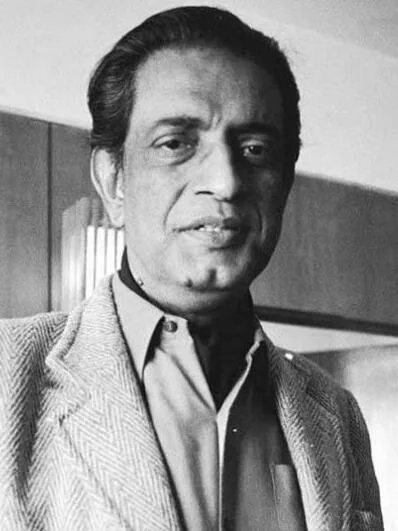
Satyajit Ray is remembered around the world as one of the great film directors. Fewer people know that before he made a single film, he spent about thirteen years as a commercial artist at an advertising agency in Kolkata, designing advertisements, book covers and lettering. That design work trained his eye, introduced him to the story of his first film, and stayed with him in every poster and title card he later made.
A family of print and pictures
Ray was born in Calcutta, now Kolkata, in 1921, into a family of writers, poets and illustrators. His grandfather, Upendrakishore Ray Chowdhury, ran a printing press and started a children's magazine called Sandesh, and as a boy Ray was drawn to the machines and the process of printing.
He first completed a degree in economics. Then, in 1940, he went to Visva-Bharati in Santiniketan to study painting at Kala Bhavana. There he learned from the painters Nandalal Bose and Benode Behari Mukherjee, teachers who encouraged students to be original and to look to Indian art traditions rather than copy Western academic styles. He later said that it was at art school that he learned to look at nature and respond to it.
Junior visualiser at D.J. Keymer
In April 1943, at the age of 22, Ray joined D.J. Keymer, a British-run advertising agency in Calcutta, as a junior visualiser. The agency later became part of Ogilvy. He stayed for about thirteen years, until the success of his first film let him work full time as a director.
At the agency he worked on campaigns for everyday products such as biscuits, hair oil and cigarettes. While many agencies of the time looked to the West for ideas, Ray brought Indian folk art motifs and calligraphic lettering into his advertising. Writers on his work describe this as a fresh, Indian look in a field that still followed colonial models.
He was fascinated by typography in both Bengali and English. Over the years he designed several typefaces for the Roman alphabet, and two of them, Ray Roman and Ray Bizarre, won an international competition in 1971.
Book covers and the road to Pather Panchali
A senior colleague at the agency, D. K. Gupta, started a publishing house called Signet Press and asked Ray to design its book jackets. In 1944 Gupta planned an abridged edition of Bibhutibhushan Bandopadhyay's novel Pather Panchali and asked Ray to illustrate it. Ray had not read much Bengali literature before this work, and designing covers gave him the chance to read widely. Gupta remarked that the book would make a good film.
In 1950 the agency sent Ray to its London office. There he watched 99 films in a few months and, on the voyage home, worked on the script for Pather Panchali. The film was released in 1955, and its poster, which he designed himself, framed a photograph of the children in a folk-style circular pattern inspired by alpana floor designs.
He never stopped designing. He took charge of the posters and publicity for his own films, drew storyboards for his scenes, and in 1961 revived Sandesh, illustrating it and creating Bengali lettering for it. Late in life he wrote that he had never taken his graphic work seriously, yet designers still study and admire it today.
His film posters broke with the usual style of the time. Instead of hand-painted pictures of film stars, he tried to capture the feeling of each story, using woodcuts, linocuts, scraperboard, pen and ink, cut-out heads, expressive lettering and photography. He had studied the work of the photographer Henri Cartier-Bresson closely, and his son Sandip has described him shut in his study, drawing, colouring and joining images until each artwork was ready for the printer. For Pather Panchali he even designed a neon sign of the two children running, placed in a busy part of the city.
The skills and habits that made the difference
The first was craft through daily work. Thirteen years of briefs, deadlines and printed pages gave Ray a working knowledge of layout, lettering and image that he carried into cinema.
The second was drawing from his own culture. He used alpana patterns, folk motifs and Bengali calligraphy instead of copying foreign styles, and that is what made his work stand out.
The third was planning visually. He sketched scenes before shooting them and designed every poster by hand. Thinking on paper first is a habit any designer can build.
What you can learn from Satyajit Rayइस कहानी से आप क्या सीख सकते हैं
- Treat client work as trainingRay learned his craft on ads for biscuits and hair oil. Every small design job, even a shop flyer, is a chance to practise layout, type and colour.
- Take typography seriouslyHe designed whole typefaces. Study how letters are built and spaced, and your designs will look more confident even with simple images.
- Use your own visual heritageFolk patterns and local scripts made Ray's work distinctive. Look at the art around you, from rangoli to signboards, for ideas that feel fresh.
- Sketch before you buildRay drew storyboards and rough layouts by hand. A quick pencil sketch saves time before you open any design software.
How you can build this skill on YUNOVAYUNOVA पर आप यह skill कैसे सीख सकते हैं
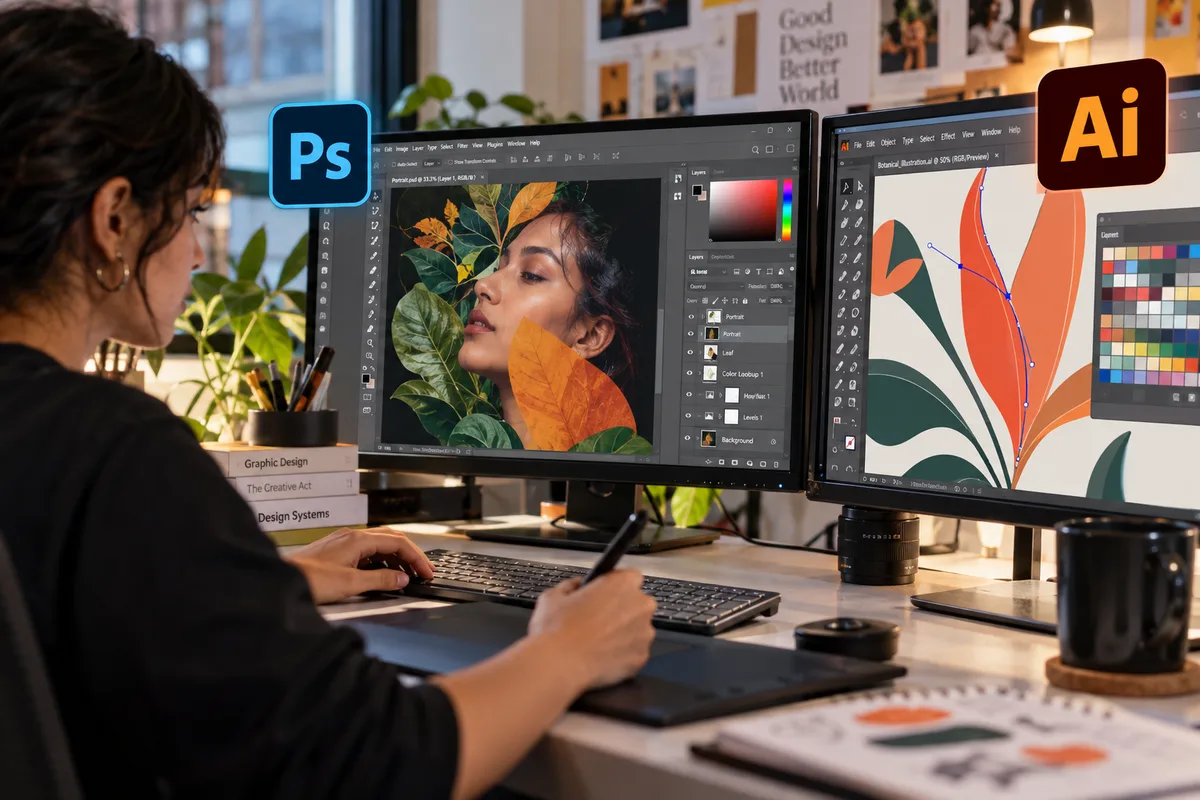
Nobody becomes Satyajit Ray from one course. But the basics he practised at an ad agency, such as layout, lettering, colour and clear visual ideas, are skills anyone can start learning. On YUNOVA you can learn Graphic Design step by step, for free, in Hindi.
हिंदी में सारांश
सत्यजीत राय फ़िल्में बनाने से पहले लगभग तेरह साल कोलकाता की एक advertising agency D.J. Keymer में commercial artist थे। वहाँ उन्होंने ads, book covers और typefaces design किए, और भारतीय लोक कला को अपने काम में शामिल किया। एक book cover पर काम करते हुए ही उन्हें अपनी पहली फ़िल्म पथेर पांचाली की कहानी मिली। आप भी YUNOVA पर Graphic Design की skill हिंदी में मुफ़्त शुरू कर सकते हैं।
Sourcesस्रोत
- Advertising & Graphic Design, satyajitray.org (accessed 18 October 2026)
- The Oscar-winning Filmmaker + Graphic Designer Satyajit Ray Made the Best Posters You've Never Seen, AIGA Eye on Design (accessed 18 October 2026)
- Satyajit Ray's Little-Known Past As A Graphic Designer, Homegrown (accessed 18 October 2026)
- Satyajit Ray, Wikipedia (accessed 18 October 2026)
Written by YUNOVA from public sources. Satyajit Ray is not affiliated with and does not endorse YUNOVA.
More storiesऔर कहानियाँ
- Amartya Sen: from Santiniketan to the Nobel, economics for human welfareEconomist and philosopher, 1998 Nobel laureate in economic sciences
- Andrew Ng: the professor who put machine learning online for everyoneCo-founder of Coursera and founding lead of Google Brain
- Andy Jassy: the marketing manager who built Amazon Web ServicesFounding leader of Amazon Web Services and Amazon's CEO