

YUNOVA Stories · Study
T. N. Seshan: the IAS officer who made India's elections fair
T. N. Seshan · IAS officer and 10th Chief Election Commissioner of India
Written by YUNOVA from public sources. T. N. Seshan is not affiliated with and does not endorse YUNOVA.यह कहानी YUNOVA ने public sources से लिखी है। इसमें बताए गए व्यक्ति YUNOVA से जुड़े नहीं हैं और YUNOVA का समर्थन नहीं करते।
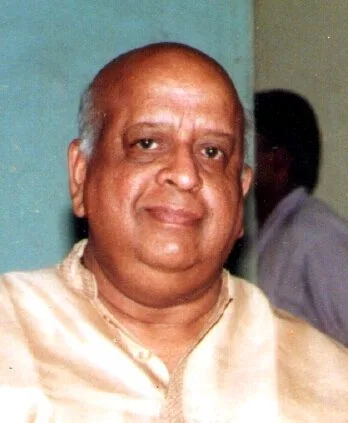
T. N. Seshan came from a village in Palakkad, studied physics, topped the civil services examination and joined the IAS in 1955. Thirty-five years later, as Chief Election Commissioner, he used powers that had always existed in the Constitution to make political parties follow the rules. For a UPSC aspirant his story is a lesson in what one officer who knows the law can do.
From Thirunellai to the IAS
Tirunellai Narayana Iyer Seshan was born in Thirunellai village near Palakkad in Kerala, the youngest of six children. Sources differ on the year, giving 1932 or 1933. He studied at Government Victoria College in Palakkad and then took an honours degree in physics at Madras Christian College, where he taught briefly after graduating.
He topped the civil services examination and joined the 1955 batch of the Indian Administrative Service, allotted to the Tamil Nadu cadre. Later he studied at Harvard University on a fellowship.
Stories from his early postings show the kind of officer he was. As transport commissioner in Madras, he learned to drive a bus so that he would understand the problems drivers faced, and once drove a bus full of passengers for eighty kilometres.
“I eat politicians for breakfast.”
— T. N. Seshan, via Newslaundry
Rising to Cabinet Secretary
His central postings included the Department of Space, the Ministry of Environment and Forests, where he served as secretary, and internal security, where he worked closely with Prime Minister Rajiv Gandhi. He spent time in the Planning Commission and briefly as Defence Secretary.
In 1989 he became Cabinet Secretary, the highest post a career civil servant can hold in India, during the last months of Rajiv Gandhi's government. By then he had served in the IAS for more than three decades.
Six years that changed Indian elections
On 12 December 1990 Seshan took office as the tenth Chief Election Commissioner of India. The Election Commission was then a low-profile body. According to the Ramon Magsaysay Award Foundation, his first study of the system listed a hundred and fifty specific abuses, and when politicians were slow to legislate reforms he set about enforcing the law himself.
He read Article 324 of the Constitution, which gives the Commission the superintendence, direction and control of elections, as broadly as it could be read. He enforced the Model Code of Conduct, acted against the distribution of liquor and the bribing of voters, stopped the misuse of government machinery and religious appeals in campaigns, and made candidates account for their spending. He pushed hard for photo identity cards for every voter. In Bihar in 1995 he held the state election in four phases, a novelty at the time.
The confrontations were fierce. In 1993 the central government made the Commission a three-member body, and Seshan took the matter to the Supreme Court, which ruled against him in 1995. He stayed until his term ended on 11 December 1996. That year he received the Ramon Magsaysay Award for Government Service.
Later years
After leaving the Commission he contested the 1997 presidential election and lost, and in 1999 he lost a Lok Sabha election from Gandhinagar. His biography, Seshan: An Intimate Story by K. Govindan Kutty, records the many episodes of his career.
He died at his home in Chennai on 10 November 2019, aged 86, after a cardiac arrest. Former Chief Election Commissioners described him as a guiding force for everyone who came after him. Business Today notes that the modern Election Commission, with its observers and expenditure scrutiny, is in large part his legacy.
The skills and habits that made the difference
The first was knowing the text. Seshan did not invent new powers; he read Article 324 closely and used what was already there. That is the habit the UPSC syllabus on polity is meant to build.
The second was method. The Magsaysay citation records that he began by listing the abuses, one by one, before he acted. A systematic study of the problem came before the famous confrontations.
The third was doing the job in person, whether that meant driving a bus as transport commissioner or scheduling a state election in phases himself. He understood the ground before he gave orders about it.
What you can learn from T. N. Seshanइस कहानी से आप क्या सीख सकते हैं
- Read the Constitution, not just notes about itSeshan's power came from Article 324, which had been there since 1950. For the polity paper, read the key articles in their own words and understand what each actually allows.
- List the problem before you solve itHe began by cataloguing a hundred and fifty abuses. When a subject feels overwhelming, write down every topic you are weak in, then work through the list.
- A physics graduate can top the civil servicesHis degree was in physics, not political science. Any subject builds the reasoning the exam needs; the general studies syllabus can be learned from scratch.
- Understand the groundHe drove a bus to understand bus drivers. For the exam and for the job after it, connect what you read to how things actually work around you.
How you can build this skill on YUNOVAYUNOVA पर आप यह skill कैसे सीख सकते हैं
Nobody becomes T. N. Seshan from one course. But his career began with the same examination that thousands of aspirants prepare for every year, and the polity, history and economics it tests are what YUNOVA's UPSC Prelims path covers, for free and in Hindi. If the Constitution itself is what interests you, the Indian Constitution skill is the place to start.
हिंदी में सारांश
टी. एन. शेषन केरल के पालक्काड ज़िले के एक गाँव से थे। उन्होंने physics पढ़ी, civil services exam में पहला स्थान पाया और 1955 में IAS में आए। 1989 में वे Cabinet Secretary बने, और 1990 से 1996 तक Chief Election Commissioner रहते हुए उन्होंने चुनावों में नियमों का सख़्ती से पालन करवाया। 1996 में उन्हें Ramon Magsaysay Award मिला। आप भी YUNOVA पर UPSC Prelims की तैयारी हिंदी में मुफ़्त शुरू कर सकते हैं।
Sourcesस्रोत
- Seshan, Tirunellai Narayanaiyer: 1996 Ramon Magsaysay Awardee for Government Service, Ramon Magsaysay Award Foundation (accessed 17 October 2026)
- Who was T N Seshan? Former CEC trending amid SIR row; check his key role in transforming Indian polls, Business Today (accessed 17 October 2026)
- TN Seshan: The crusader and newsmaker India needed in the 1990s, Newslaundry (accessed 17 October 2026)
- Obituary: T N Seshan (1932-2019), Swarajya (accessed 17 October 2026)
- T. N. Seshan, Wikipedia (accessed 17 October 2026)
Written by YUNOVA from public sources. T. N. Seshan is not affiliated with and does not endorse YUNOVA.
More storiesऔर कहानियाँ
- Amartya Sen: from Santiniketan to the Nobel, economics for human welfareEconomist and philosopher, 1998 Nobel laureate in economic sciences
- Andrew Ng: the professor who put machine learning online for everyoneCo-founder of Coursera and founding lead of Google Brain
- Andy Jassy: the marketing manager who built Amazon Web ServicesFounding leader of Amazon Web Services and Amazon's CEO