

YUNOVA Stories · Business & Productivity
Verghese Kurien: the engineer who built India's milk supply chain
Verghese Kurien · Father of the White Revolution and first chairman of NDDB
Written by YUNOVA from public sources. Verghese Kurien is not affiliated with and does not endorse YUNOVA.यह कहानी YUNOVA ने public sources से लिखी है। इसमें बताए गए व्यक्ति YUNOVA से जुड़े नहीं हैं और YUNOVA का समर्थन नहीं करते।
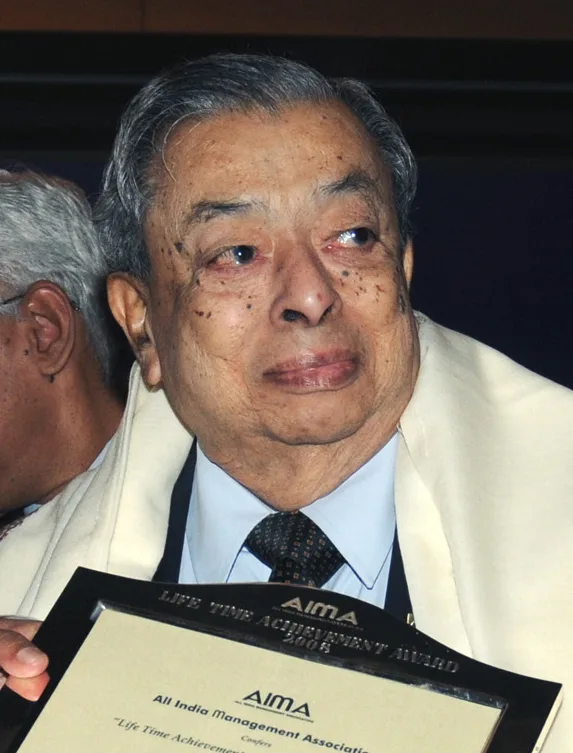
A glass of milk in a big Indian city often begins with a farmer in a village, and getting it from one to the other, fresh and at a fair price, is a supply chain problem. Verghese Kurien spent his life solving it. Sent to the small town of Anand on a government bond, he stayed for decades, helped build Amul and led Operation Flood, which linked village cooperatives to towns and cities across India.
An engineer on a bond
Verghese Kurien was born on 26 November 1921 in Kozhikode, Kerala. He went to Michigan State University in the United States on a government scholarship for a master's degree, and in 1949 he returned to India and was posted to a government creamery in Anand, Gujarat.
The posting was part of a bond he had signed in return for the scholarship, and it was not meant to last more than a few years. Instead, Anand became his home for the rest of his working life.
Building the Kaira cooperative
In Anand, farmers had formed the Kaira District Cooperative Milk Producers' Union in 1946, at the initiative of Sardar Vallabhbhai Patel. The Ramon Magsaysay Award Foundation records that it began by combining two village milk societies and a dairy that processed 500 pounds of milk a day. In 1949, at the request of its chairman Tribhuvandas Patel, Kurien joined it.
Tribhuvandas Patel was the organiser of the farmers; Kurien, as manager, gave the administrative and scientific direction. The Bombay government contracted to buy the union's pasteurised milk at stable prices for the Aarey Milk Colony, which supplied the city, and new roads were built so milk could be collected from outlying villages. By 1962 the union had 219 village societies with 46,400 members.
There was a problem every supply chain manager will recognise. Milk production rose in winter, but demand did not. To use the seasonal surplus, the union built a processing plant. It was the first in India to make milk powder, condensed milk and baby food powder, and the first in the world to turn buffalo milk into powder. Its products were sold under the name Amul. In 1973 Kurien brought the district unions together as the Gujarat Co-operative Milk Marketing Federation, which markets Amul.
Operation Flood: a national milk grid
In 1965 the government set up the National Dairy Development Board to spread the Anand model across India, with Kurien as its first chairman. NDDB launched Operation Flood in 1970, one of the world's largest rural development programmes.
In its first phase, from 1970 to 1980, Operation Flood linked 18 of India's main milk-producing regions with consumers in Delhi, Mumbai, Kolkata and Chennai. It was paid for by selling skimmed milk powder and butter oil gifted by the European Economic Community through the World Food Programme. By the end of 1985 there were 43,000 village cooperatives with 4.25 million milk producers, and the third phase, ending in 1996, added thousands more.
NDDB describes the result as a National Milk Grid that links producers with consumers in more than 700 towns and cities, smoothing seasonal and regional price differences while giving farmers fair prices. India became the world's largest milk producer.
Recognition
Kurien received the Ramon Magsaysay Award in 1963, shared with others, for improving milk supply to Bombay and raising the living standards of village producers. In 1989 he received the World Food Prize, whose citation recognised that feeding people means pairing gains in production with good management and distribution. He was also awarded the Padma Vibhushan. He published his memoir, I Too Had a Dream, in 2005, and died in Nadiad, Gujarat, on 9 September 2012, at the age of 90.
The skills and habits that made the difference
The first was thinking about the whole chain. Kurien's work joined collection from villages, processing, transport, and sales in cities into one system that the farmers owned.
The second was turning a mismatch into a product. When winter milk outran demand, the answer was processing that could store milk as powder and sell it later.
The third was patient organisation. Village societies, district unions, a state federation and a national board were built one layer at a time, each with a clear job.
What you can learn from Verghese Kurienइस कहानी से आप क्या सीख सकते हैं
- Map the whole chainKurien looked from the farmer's cow to the city customer. In supply chain work, draw every step from source to buyer before you try to fix one part.
- Plan for seasonal swingsMore milk in winter led to a processing plant. Study how supply and demand change over the year, and plan storage or capacity for the gap.
- Build networks, not single routesOperation Flood linked many producing regions to many cities. A network with several sources and markets is steadier than one long line.
- Make the chain fair to its first linkCooperatives gave farmers fair, regular prices. A supply chain lasts when every partner in it, especially the smallest, gains from it.
How you can build this skill on YUNOVAYUNOVA पर आप यह skill कैसे सीख सकते हैं
Nobody becomes Verghese Kurien from one course. But the ideas behind his work, from collection and storage to transport and distribution, are skills anyone can start learning. On YUNOVA you can learn Supply Chain & Operations step by step, for free, in Hindi.

हिंदी में सारांश
वर्गीज़ कुरियन का जन्म 1921 में केरल के कोझिकोड में हुआ और वे 1949 में एक सरकारी bond के तहत गुजरात के आणंद पहुँचे। वहाँ उन्होंने किसानों की Kaira cooperative को आगे बढ़ाया, जिससे Amul बना। NDDB के पहले chairman के रूप में उन्होंने Operation Flood चलाया, जिसने गाँव के दूध उत्पादकों को देश के शहरों से जोड़ा। आप भी YUNOVA पर Supply Chain की skill हिंदी में मुफ़्त सीखना शुरू कर सकते हैं।
Sourcesस्रोत
- Kurien, Verghese, Ramon Magsaysay Award Foundation (accessed 18 October 2026)
- Genesis, National Dairy Development Board (accessed 18 October 2026)
- Operation Flood, National Dairy Development Board (accessed 18 October 2026)
- Verghese Kurien made Amul a force to reckon with, Business Today (accessed 18 October 2026)
- Verghese Kurien: death of an Indian milk revolutionary, FoodNavigator (accessed 18 October 2026)
- Verghese Kurien, Wikipedia (accessed 18 October 2026)
Written by YUNOVA from public sources. Verghese Kurien is not affiliated with and does not endorse YUNOVA.
More storiesऔर कहानियाँ
- Amartya Sen: from Santiniketan to the Nobel, economics for human welfareEconomist and philosopher, 1998 Nobel laureate in economic sciences
- Andrew Ng: the professor who put machine learning online for everyoneCo-founder of Coursera and founding lead of Google Brain
- Andy Jassy: the marketing manager who built Amazon Web ServicesFounding leader of Amazon Web Services and Amazon's CEO